Serving the Numerical Simulation community since 1989



News & Events

Numerical simulation has substantial unrealized potential due to a disconnect between the professional practice of finite element modeling and the underlying science of numerical simulation. Realizing this potential requires bridging that gap—a challenge that entails overcoming several critical obstacles.
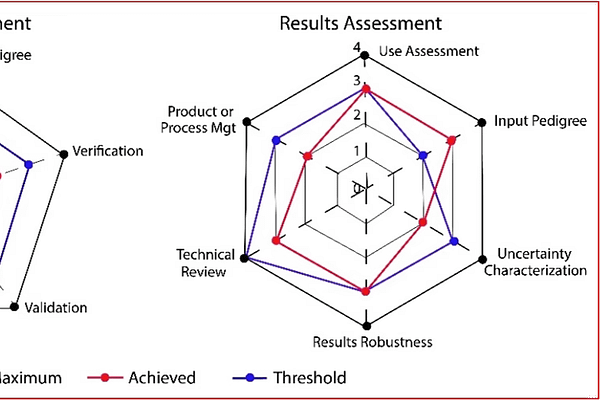
Compliance with ASME and NASA standards on verification, validation, and uncertainty quantification (VVUQ) is often taken as sufficient evidence that simulation results can be trusted. This is a mistake, however. Compliance alone does not answer the question that truly matters to decision-makers: Are the predictions reliable enough for the decision at hand?
AI is rapidly transforming engineering workflows. However, a fundamentally important issue rarely gets discussed: AI explanations are only as trustworthy as the simulations they rely on. This blog post explores the rigorous technical requirements that must be met to ensure that numerical simulations provide the transparent, machine-interpretable evidence that explainable AI demands.
Dynamic Results Mining.
Solution Verification.
Simulation Governance.
Democratization.