 Serving the Numerical Simulation community since 1989

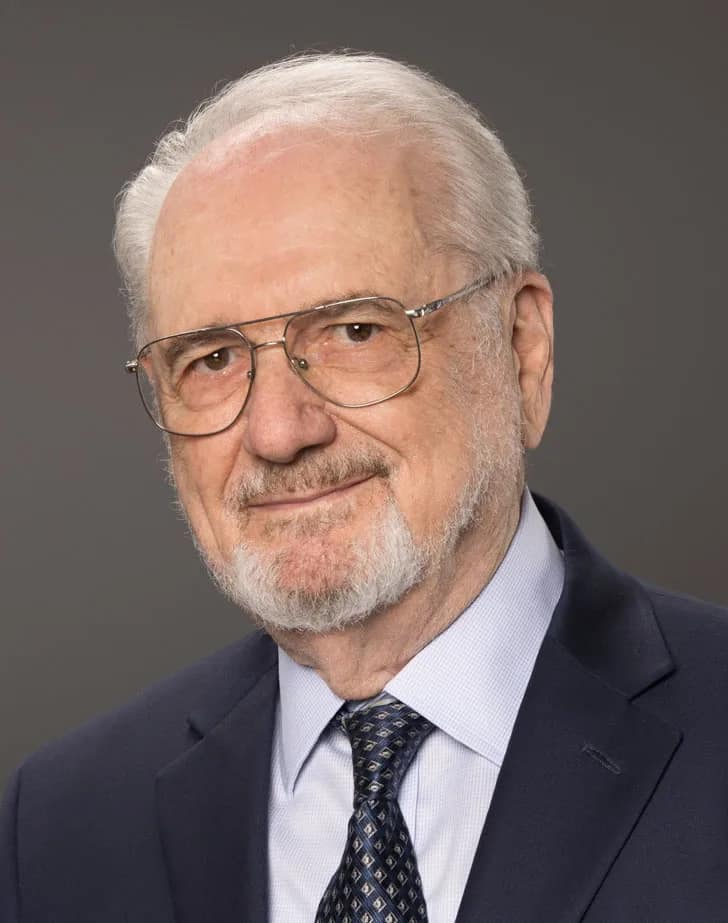
By Dr. Barna Szabó
Engineering Software Research and Development, Inc.
St. Louis, Missouri USA
Ivo Babuška—my friend, mentor, collaborator, and co‑founder of ESRD—would have turned 100 this month.
Born in Prague, Czechoslovakia, on March 22, 1926, he and his family relocated to the United States following the Prague Spring of 1968. He was appointed Distinguished Professor at the University of Maryland, College Park, in what is now the Institute for Physical Science and Technology, where he began investigating the mathematical foundations of the finite element method. Reference [1] marks the beginning of mathematical research in this field. At that time, he focused on adaptive control of the errors of approximation.
I met him in 1977 when I attended the GAMM Conference in Copenhagen. That is where I reported on my results concerning the investigation of the p-version of the finite element method. The main point of my presentation was that, contrary to claims that increasing the polynomial degree of elements on a fixed mesh cannot improve convergence rates, I found evidence that it does.
My presentation took place just before the morning coffee break. Babuška introduced himself during the break. I already knew him by reputation as an excellent mathematician. He asked a series of increasingly detailed questions. Lunchtime came, then the afternoon passed. We said goodbye after dinner but promised to continue our conversation sometime soon.
I was happy to finally meet someone who was genuinely interested in my work. Up to that point, I had great difficulty persuading reviewers of my papers and research proposals that the topic was worth investigating. Researchers tend to become locked into a paradigm and discourage any challenges to it. Luckily, Ivo Babuška was one of the very few exceptions.
In the spring of 1978, he invited me to give a seminar in the Department of Mathematics at the University of Maryland. After the seminar, he told me that the results showing faster convergence were extremely interesting. However, since I observed a rate of convergence exceeding the theoretical limit, he argued that this could not represent asymptotic behavior and must instead reflect pre-asymptotic behavior. In other words, as the number of degrees of freedom increased, the convergence rate would eventually slow to its theoretical limit. My paper [2] had already been published, so I asked him to write a discussion explaining that the conjecture regarding faster convergence referred to pre-asymptotic rather than asymptotic behavior.
From a practical point of view, this distinction would matter only if the slowdown occurred above 1% relative error. My results showed that it did not slow down within the range of degrees of freedom I was able to use with the computational resources available to me. Therefore, from a practical standpoint, the distinction did not seem important.
The following summer, he telephoned me. He began by saying that he had good news for me, because he realized that the convergence rate was asymptotic after all, and that the mistake was in interpreting the relevant theorem. He asked me if I would be willing to publish the results and their mathematical analysis in two joint papers, one for the mathematical community [3] and one for the engineering community [4]. That’s how our collaboration began, and it continued until just weeks before his passing on April 12, 2023.
I spent a sabbatical semester in 1982 as a visiting professor in the Department of Mathematics at the University of Maryland at College Park, where we began work on our first book, published in 1991 [5]. The second edition appeared 30 years later, in 2021 [6]. In between, we published another book focusing on verification and validation [7].
Our collaboration produced important results in 1984 and 1985. Among them was the proof and demonstration that, with an appropriate choice of mesh, exponential convergence rates in the energy norm are achievable [8], [9], [10]. This enabled efficient control of discretization errors for a large and important class of problems.
The impact of academic research is typically measured by the number of publications and citations. Ivo Babuška ranks among the most highly cited applied mathematicians of all time. In applied mathematics and engineering, however, the primary goal of research is to advance methods used in professional practice. Therefore, a far more meaningful measure of impact is whether the research results are actually adopted and used in practice. Ivo Babuška had a keen interest in solving engineering problems. This will be discussed next.
Obstacles
After we demonstrated that combining proper meshing with the p-version produced exponential convergence rates, we believed that this highly efficient discretization strategy would be widely adopted. This did not happen, however. Transferring research results from academia into professional practice can (and usually does) involve navigating obstacles that would not exist in an ideal world.
By the mid‑1980s, finite element modeling with legacy software had become widely accepted and deeply embedded in engineering workflows. Adopting the p‑version would have required such a major overhaul of these legacy codes that only their nameplates would have remained the same. The scale of this effort generated considerable resistance from finite element software providers, which continues to this day. It may sound incredible, but the core technology of legacy finite element software still relies on a knowledge base from the 1960s.
Three Initiatives
There were three initiatives to make these new results accessible to the engineering community:
- In 1984, a start-up company, called Noetic Technologies, Inc., was formed in St. Louis, Missouri, with the mission of developing a software product using the p-version for error control. Noetic Technologies focused on aerospace applications, addressing durability and damage-tolerance problems. The software was named Probe. Ivo Babuška and I served as consultants. Probe made a posteriori error estimation and superconvergent extraction of stress intensity factors accessible in industrial settings.
- Noetic was acquired by the MacNeal-Schwendler Corporation (developers of MSC/NASTRAN) in 1989. At the time of the acquisition, it was planned to develop the two codes side by side—NASTRAN for general structural analysis and Probe for strength/stress analysis. Unfortunately, this plan was later abandoned in favor of merging the two codes. Merging the codes made no sense because NASTRAN’s 1960s‑era architecture was not flexible enough to accommodate the technical requirements of the p‑version, dooming the effort.
- Another startup company, Rasna Corporation, was founded in 1987 in San Jose, California (Silicon Valley), by four engineers who left IBM’s Almaden Research Center after recognizing the substantial potential of p-version in mechanical design. Rasna began with a considerably larger initial investment than Noetic did. This greatly accelerated the industrial adoption of the p-version. The company was ranked #3 on the Inc. 500 list of fastest-growing private U.S. companies in 1994. Rasna was acquired by Parametric Technology Corporation (PTC) in 1995, and its flagship product, MECHANICA, is now integrated into Creo Simulate.
- In 1989, we decided to form a company, Engineering Software Research and Development, Inc.(ESRD), with the mission of advancing the quality, reliability, and timeliness of information used in engineering decision-making. The founders were Ivo Babuška, Kent Myers, and I. Establishing ESRD enabled us to assemble a small professional team to implement the technology we believed essential for delivering the benefits of key research results to the engineering community. Our efforts focused on aerospace applications, particularly in durability and damage tolerance. Boeing, Lockheed Martin, Northrop Grumman, the U.S. Navy, and the U. S. Air Force are among the largest users of the company’s flagship product, StressCheck. To my knowledge, StressCheck is the only commercial finite element analysis software that faithfully implements the algorithms based on the science of finite element analysis.
Outlook
The evolution of AI represents one of the most explosive growth periods in computing history. Agentic AI systems have emerged that not only answer questions but also execute multi-step tasks using tools, planning, memory, and reflection. Highly relevant to numerical simulation is explainable AI (XAI) — a set of algorithms that make the decisions and outputs of artificial intelligence systems understandable and interpretable to humans. Undoubtedly, agentic AI combined with XAI will radically change engineering workflows.
In the field of numerical simulation, this will require a posteriori error estimation, a clear separation between model‑form and discretization errors, and the use of hierarchical finite element spaces and nested models of increasing complexity. Consequently, XAI algorithms will need to be grounded in the science of finite element analysis rather than the art of finite element modeling. As a result, Ivo Babuška’s contributions will continue to grow in importance.
Travels with Ivo
Over the years, we traveled to many places to participate in conferences, seminars, workshops, and present short courses. Our itineraries took us to Germany, Italy, Hungary, Portugal, Canada, Argentina, and Japan.
Ivo had a childlike curiosity about factual matters, but had no patience for poetry or literature. In this respect, his views closely resembled those of the 18th-century philosopher David Hume, who wrote:“If we take in our hand any volume of divinity or school metaphysics, for instance, let us ask: Does it contain any abstract reasoning concerning quantity or number? No. Does it contain any experimental reasoning concerning matter of fact and existence? No. Commit it then to the flames, for it can contain nothing but sophistry and illusion.”
Of course, Ivo would not burn such books—but he would not read them either.
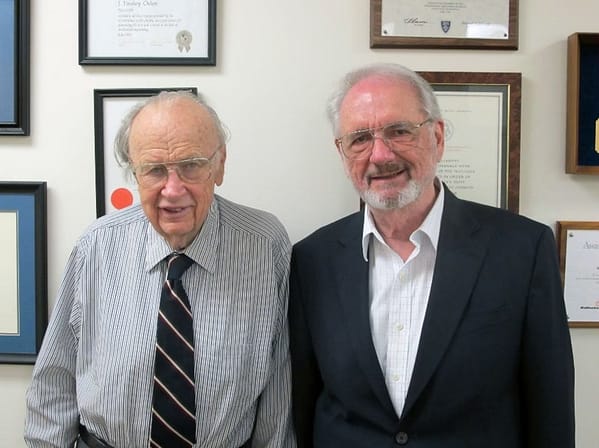
Ivo possessed exceptional persuasive power. In the early 1990s, when he was still at the University of Maryland, we were scheduled to participate in a conference in Austin, Texas. The plan was that he would fly to St. Louis, and from there we would fly to Austin together. This would allow us to discuss a new paper we were writing at the time.
Everything went as planned, except the flight to Austin was fully booked, so we could not be seated side by side. Ivo occupied an aisle seat about seven rows ahead of me, while I was in a middle seat. As soon as the fasten-seat-belt sign was turned off, Ivo walked back and told me that the gentleman sitting next to him was willing to trade seats with me. After we exchanged seats, I noticed that the young woman sitting by the window was eyeing us with an air of unmistakable hostility. It turned out that Ivo had persuaded her husband to change seats with me, and they were on their honeymoon.
Disposition
Ivo was one of the happiest men I have ever known. He was happiest when he succeeded in proving a new theorem.
Around 1990, I received a postcard from him from China. The front of the card shows The Hall of Thousand Buddhas at the Shaolin Monastery in China. Ivo wrote: “How many theorems about the h-p version could 1000 Buddhas find? I imagine they did 1000 because otherwise they could not be happy. At least 1 theorem per Buddha is necessary condition for entering Nirvana.”

Legacy
Ivo elevated finite element analysis to where it is now: a branch of applied mathematics. He motivated and guided many bright young mathematicians. His legacy, from the perspective of one of those mathematicians—not very young anymore—is summarized in reference [11].
The expected merging of numerical simulation with explainable artificial intelligence will undoubtedly rest on the foundation established by his theorems.
References
[1] Babuška I. and Aziz, A. K. “Lectures on mathematical foundations of the finite element method,” University of Mayland, College Park, 1972.
[2] Szabó, B. A. and Mehta, A. K. p‐Convergent finite element approximations in fracture mechanics. International Journal for Numerical Methods in Engineering, 12(3), pp. 551-560, 1978.
[3] Babuška, I., Szabó, B. A. and Katz, I. N. The p-version of the finite element method. SIAM Journal on Numerical Analysis, 18(3), pp. 515-545, 1981.
[4] Babuška, I. and Szabó, B. On the rates of convergence of the finite element method. International Journal for Numerical Methods in Engineering, 18(3), pp. 323-341, 1982.
[5] Szabó, B. and Babuška, I. Finite Element Analysis. John Wiley & Sons Ltd. New York, 2021.
[6] Szabó, B. and Babuška, I. Finite element analysis: Method, Verification and Validation. 2nd Ed. John Wiley & Sons Inc. Hoboken NJ, 2021.
[7] Szabó, B. and Babuška, I. Introduction to Finite Element Analysis: Formulation, Verification and Validation. John Wiley & Sons Ltd. Chichester, 2011.
[8] Guo, B. and Babuška, I. The hp version of the finite element method: Part 1: The basic approximation results. Computational Mechanics, 1(1), pp. 21-41, 1986.
[9] Guo, B. and Babuška, I. The hp version of the finite element method: Part 2: General results and applications. Computational Mechanics, 1(3), pp. 203-220, 1986.
[10] Szabó, B. A. Mesh design for the p-version of the finite element method. Computer Methods in Applied Mechanics and Engineering, 55(1-2), pp. 181-197, 1986.
[11] Arnold, D. N. Remembering Ivo Babuška. SIAM News, 56(6), July/August 2023.
Direct link: https://www.siam.org/publications/siam-news/articles/remembering-ivo-babuska
Related Blogs:
- A Memo from the 5th Century BC
- Obstacles to Progress
- Why Finite Element Modeling is Not Numerical Simulation?
- XAI Will Force Clear Thinking About the Nature of Mathematical Models
- The Story of the P-version in a Nutshell
- Why Worry About Singularities?
- Questions About Singularities
- A Low-Hanging Fruit: Smart Engineering Simulation Applications
- The Demarcation Problem in the Engineering Sciences
- Model Development in the Engineering Sciences
- Certification by Analysis (CbA) – Are We There Yet?
- Not All Models Are Wrong
- Digital Twins
- Digital Transformation
- Simulation Governance
- Variational Crimes
- The Kuhn Cycle in the Engineering Sciences
- Finite Element Libraries: Mixing the “What” with the “How”
- A Critique of the World Wide Failure Exercise
- Meshless Methods
- Isogeometric Analysis (IGA)
- Chaos in the Brickyard Revisited
- Why Is Solution Verification Necessary?
- Variational Crimes and Refloating the Costa Concordia
- Lessons From a Failed Model Development Project
- Where Do You Get the Courage to Sign the Blueprint?
- Great Expectations: Agentic AI in Mechanical Engineering
- The Differences Between Calibration and Tuning
- Honored in the Breach







Leave a Reply
We appreciate your feedback!
You must be logged in to post a comment.