• About
    • Who We Are
    • Partners & Providers
    • News & Events
    • The ESRD Blog
    • Careers
    • Contact Us
  • Applications
    • What We Solve
    • Detailed Stress
    • Composites
    • Fracture Mechanics
    • Residual Stress
    • Sim Apps
  • Products
    • What We Develop
    • StressCheck Professional
      • StressCheck Core
      • Solvers
      • Advanced Modules
      • Utilities
      • Academic Licensing
    • StressCheck Apps
      • CAE Handbook
      • StressCheck Tool Box
    • Product Updates
  • Support
    • How We Can Help
    • Training
    • Webinars
    • Quick Start Guide
    • Help Documentation
    • Software FAQ’s
  • Simulation
    • How We Simulate
    • Benchmarks
    • Simulation Governance
    • History of FEA
    • Dictionary & Terms
  • Resources
    • Browse Our Resource Library
    • White Papers
    • Case Studies
    • Product Demos
    • StressCheck Tutorials
Serving the Numerical Simulation community since 1989
  • Contact Us
  • Register
Login
Forgot Password?
Join Us
ESRDESRD
ESRDESRD
  • About
    • Who We Are
    • Partners & Providers
    • News & Events
    • The ESRD Blog
    • Careers
    • Contact Us
  • Applications
    • What We Solve
    • Detailed Stress
    • Composites
    • Fracture Mechanics
    • Residual Stress
    • Sim Apps
  • Products
    • What We Develop
    • StressCheck Professional
      • StressCheck Core
      • Solvers
      • Advanced Modules
      • Utilities
      • Academic Licensing
    • StressCheck Apps
      • CAE Handbook
      • StressCheck Tool Box
    • Product Updates
  • Support
    • How We Can Help
    • Training
    • Webinars
    • Quick Start Guide
    • Help Documentation
    • Software FAQ’s
  • Simulation
    • How We Simulate
    • Benchmarks
    • Simulation Governance
    • History of FEA
    • Dictionary & Terms
  • Resources
    • Browse Our Resource Library
    • White Papers
    • Case Studies
    • Product Demos
    • StressCheck Tutorials

Webinars

Home EventsWebinars (Page 2)
ESRD Summer 2019 Webinar Survey

ESRD Summer 2019 Webinar Survey

Jan 23, 2019

We need your vote!  ESRD is planning a Summer 2019 webinar on a “hot” Aerospace & Defense application, modeling best practice or StressCheck feature, and we are requesting your participation in selecting the next topic.

Additionally, ESRD is hiring engineers! Check out the job postings at the end of the survey.

Hierarchic Approaches to Modeling Fastened Connections Webinar Coming Soon

Hierarchic Approaches to Modeling Fastened Connections Webinar Coming Soon

Jun 12, 2018

There is now only one week until ESRD’s June 20th @ 1:00 pm EST webinar titled “Hierarchic Approaches to Modeling Fastened Connections”. Register now to learn more and get the meeting details!

ESRD June Webinar in Development

ESRD June Webinar in Development

Apr 24, 2018

We need your vote! ESRD is planning a June 20th, 2018 webinar on a must-see Aerospace & Defense application, and we are requesting your participation in selecting the next topic. […]

Sign Up for Next Week’s High-Fidelity Stress Analysis Webinar

Sign Up for Next Week’s High-Fidelity Stress Analysis Webinar

Dec 4, 2017

On Thursday, December 14th @ 1:00 pm EST an Aerospace & Defense-oriented webinar titled “High-Fidelity Stress Analysis for S.A.F.E.R. Structural Simulation” will be provided by ESRD’s Brent Lancaster and Gordon Lehman. Sign up today […]

ESRD’s High-Fidelity Stress Analysis Webinar Recording Now Available

ESRD’s High-Fidelity Stress Analysis Webinar Recording Now Available

Dec 18, 2017

Last week ESRD presented a webinar titled “High-Fidelity Stress Analysis for S.A.F.E.R. Structural Simulation”. The webinar’s recording is now available […]

Webinar: Standardize Recurring Analysis and Process Workflows Using FEA-Based Simulation Apps

Webinar: Standardize Recurring Analysis and Process Workflows Using FEA-Based Simulation Apps

Mar 18, 2021

March 18, 2021 @ 10:00 am EST

Strategies for the democratization & standardization of recurring simulation tasks via ESRD’s CAE Handbook will be demonstrated.

This webinar is now available to watch on-demand.

WATCH NOW

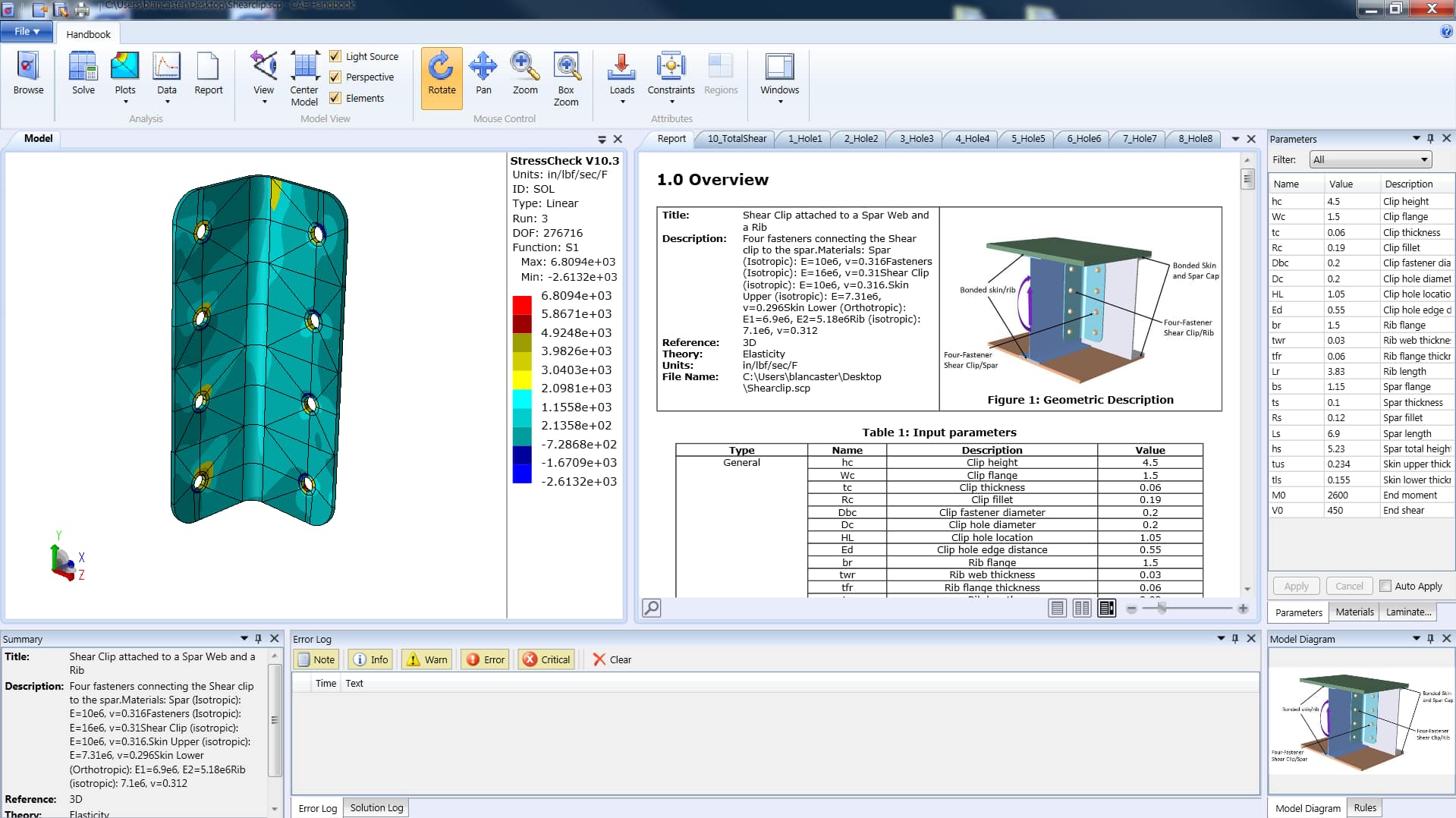
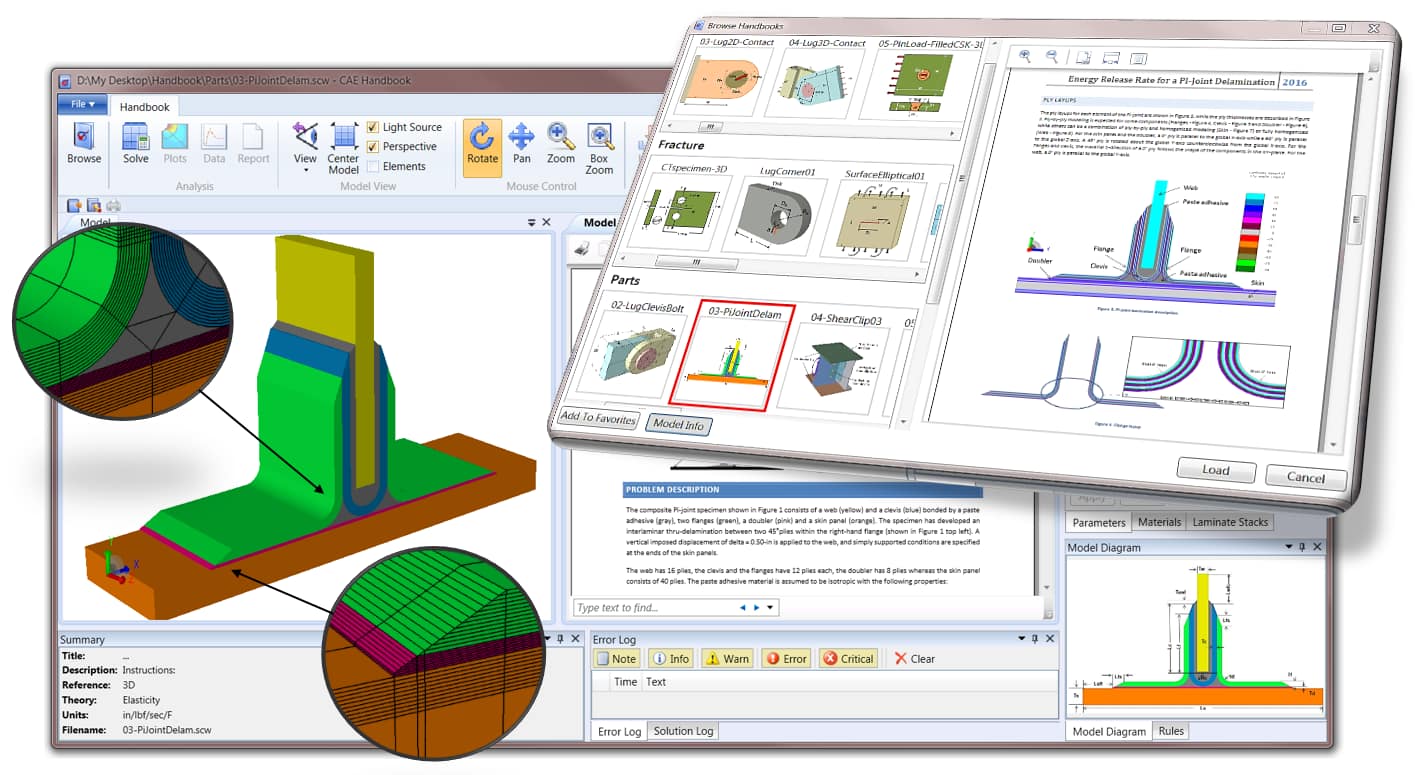
ESRD’s CAE Handbook

WEBINAR SUMMARY

In this 45-minute webinar, hosted by the Altair Partner Alliance (APA), we will discuss how ESRD’s CAE Handbook modernizes and streamlines the implementation of digital engineering handbooks for the standardization of corporate process workflows.

WEBINAR HIGHLIGHTS

The CAE Handbook framework allows for the corporate standardization of many engineering computational simulations. This is done by allowing companies to build an electronic or digital handbook models that captures corporate intellectual property. This enables non-FEA experts to solve many basic simulations that historically have been simplified in the form of Microsoft Excel engineering computation spreadsheets, and internally developed engineering programs that are only fully understood by the engineers who develop them. CAE Handbook guarantees consistent results and provides an objective measure of the quality of the solution.

Topics covered include:

  • CAE Handbook software overview
  • Live demo
  • Live audience Q&A

Webinar: Simulation Governance Is Critical for Reliable Condition-Based (Predictive) Maintenance

Webinar: Simulation Governance Is Critical for Reliable Condition-Based (Predictive) Maintenance

Apr 22, 2021

April 22, 2021 @ 11:00 am EST

Strategies will be explored for developing mathematical models to support condition-based maintenance (CBM) decisions via a practical case study.

WEBINAR SUMMARY

This webinar, hosted by ESRD partner Revolution in Simulation, will present a case study in which the goal was the development of a mathematical model for supporting condition-based maintenance (CBM) decisions.

The model was designed for estimating the remaining fatigue service life of high-value mechanical components, given their service history and that specific flaws (such as corrosion defects) have been discovered in them, thus enabling CBM  to move damaged component removals from unscheduled to scheduled maintenance action.

WEBINAR HIGHLIGHTS

  • Mathematical models have both intuitive, creative components and objective, science-based components. These two components must be in equilibrium.
  • What is the difference between finite element modeling and numerical simulation?
  • What is the domain of calibration and how to specify it?
  • How the outcome of validation experiments should be evaluated and reported?
  • Why is the development of mathematical models open-ended? – Why no one can claim to have the last word?
  • Why simulation governance is essential for the success of numerical simulation projects?

Webinar: Simulation Governance & Management

Webinar: Simulation Governance & Management

Sep 2, 2021

September 2, 2021 @ 1:00 pm EST

This 15-minute recorded presentation was prepared for the NAFEMS World Congress (Salzburg, October 2021). It highlights the mission-oriented nature of simulation governance and presents an example of a model development project.

This webinar is now available to watch on-demand.

WATCH NOW
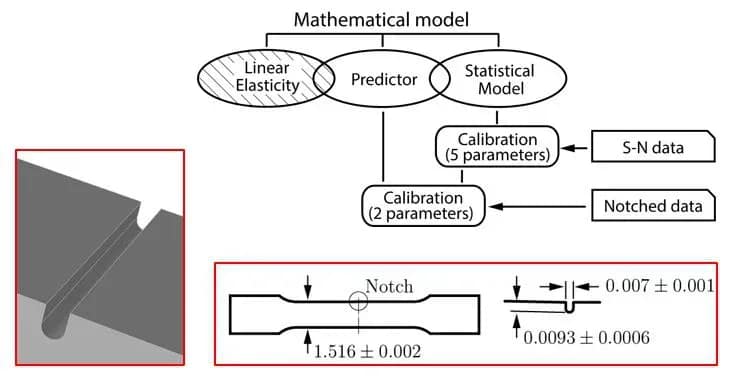
Calibration of the predictor.

WEBINAR SUMMARY

The main ideas of, and the case for, simulation governance are easy to understand.  The development and implementation of a plan for simulation governance is not at all easy, however, and requires careful consideration of the mission, and associated predictive model(s), at hand.

In this pre-recorded webinar, ESRD Chairman Dr. Barna Szabó addresses some of the key issues of simulation governance, including how model development must adhere to the requirements of simulation governance in order to minimize risk and magnify reliability.

Note: this webinar was originally prepared by Drs. Szabó and Actis for the NAFEMS World Congress 2021 session on Simulation Governance.

WEBINAR HIGHLIGHTS

  • Why planning for simulation governance is mission-dependent
  • Application of the concepts and procedures of predictive computational science: Focus on model development
  • Example of a model development project: Prediction of the probability of fatigue failure of a metal part subjected to cyclic loading in the high cycle range
  • Why the open-ended nature of model development projects makes the exercise of simulation governance essential

Webinar: Mastering StressCheck: Practical Training Approaches & Online Resources for A&D Engineers

Webinar: Mastering StressCheck: Practical Training Approaches & Online Resources for A&D Engineers

Feb 12, 2020

February 12, 2020 @ 1:00 pm EST

Strategies for mastering StressCheck Professional for a variety of Aerospace & Defense engineering applications, and a review of the available training options and online resources, will be explored.

This webinar is now available to watch on-demand.

WATCH NOW
Whereas most FEA is built on the technology of the 1950's and 1960's, StressCheck is built on active technology and proven to get the right answer faster.

WEBINAR SUMMARY

In this 2 hour webinar we will review training approaches focused on applications to make numerical simulation via finite element analysis S.A.F.E.R. - Simple, Accurate, Fast, Efficient, and Reliable.

WEBINAR HIGHLIGHTS

  • Selections from ESRD’s Introduction to StressCheck training course focusing on typical engineering applications for A&D will be previewed, and training options for gaining practical StressCheck experience will be explored.
  • We will have a walk through our rapidly growing and extensive Resource Library, with tips on finding the most applicable tutorial video, best practice, FAQ topic or online resource to support your simulation needs.
  • Case studies of the engineering applications targeted during an Introduction to StressCheck training course, such as multi-body contact, global-local analysis, and proper application of boundary conditions, will be presented.

Webinar: Introduction to Multi-Body Contact in StressCheck

Webinar: Introduction to Multi-Body Contact in StressCheck

Jun 23, 2020

June 23, 2020 @ 1:00 pm EST

Strategies for modeling, solving & post-processing 3D multi-body contact applications in StressCheck Professional, along with implementation details & troubleshooting recommendations, will be explored.

This webinar is now available to watch on-demand.

WATCH NOW

WEBINAR SUMMARY

In this pre-recorded 2 hour webinar we will review the scope, typical applications, model setup, best practices, quality assurance checks, troubleshooting recommendations, and algorithmic details for StressCheck's multi-body contact implementation.

WEBINAR HIGHLIGHTS

Introduction to Multi-Body Contact: Part 1

  • Overview of scope and supported problem classes
  • “How It Works”
  • Sample multi-body contact applications & use cases (e.g. fastened connections, fittings, splice joints, etc.)
  • Setting up a model for multi-body contact & checking solution quality
  • End-to-End (E2E) Demo: 3D Fork Fitting Analysis

Introduction to Multi-Body Contact: Part 2

  • Implementation details & FAQ’s
  • Contact algorithm: theory & application
  • Recommendations & best practices
  • Troubleshooting common issues
  • ESRD Website Resources

  • 1
  • 2
  • 3
  • 4
  • 5

Looking for Resources?

Interested in a Demo, Evaluation or Purchase?

Have a Software Question, Issue or Feature Request?

Recent News & Events

  • Trustworthiness in Simulation: Credibility or Decision-grade Reliability?
  • Beyond the Black Box: Explainable AI Requires Explainable Simulation
  • Turtle Shells and Legacy Finite Element Codes: Evolutionary Constraints in the Age of Explainable AI

Quick Links

  • Quick Start Guide
  • Documentation
  • Software FAQs
  • Software Demos

Testimonials

  • “The p-type element has been used to great advantage in the finite element system ESRD StressCheck, [26]. This software provides the engineer with the means to conduct solution verification in an extremely straightforward manner by simply increasing the degree of the element, monitoring convergence and using Richardson extrapolation reliably to estimate the error. This can be conducted automatically by the software thereby enabling the engineer to concentrate on the engineering rather than the simulation. StressCheck has also been used to develop ESRD’s Handbook and Toolbox applications. The first of these provides engineers with a repository of parameterised standard problems of the type found in texts like Roark’s “Formulas for Stress and Strain”, [27]. The second, Toolbox, is a tool that can be used to parameterise a company’s range of components for rapid and reliable analysis by non-expert analysis. Toolbox then is an exemplary of the way in which the democratisation of simulation can be applied.”

    Angus Ramsay, PhD
    Engineering Director, Ramsay Maunder Associates

Testimonials

“StressCheck is the work horse for NAVAIR Structures’ detailed stress and stress concentration calculations. This software also is the basis for our development of a Structural Analysis Management System.”

Dr. David John Barrett, Head , Airframe Technology Branch, NAVAIR

Member Portal

  • Member Registration
  • Member Login

Contact Us

© 2026 · Engineering Software Research & Development, Inc. | Terms & Conditions | Privacy & Cookie Policy | Software License Agreement | Software Maintenance and Technical Support Policy

We use cookies on our website to give you the most relevant experience by remembering your preferences and repeat visits, as outlined in our Cookie Policy. You may adjust your cookie preferences within .

ESRD
Powered by  GDPR Cookie Compliance
Privacy Overview

This website uses cookies to improve your experience while you navigate through the website. Out of these, the cookies that are categorized as necessary are stored on your browser as they are essential for the working of basic functionalities of the website. We also use third-party cookies that help us analyze and understand how you use this website. These cookies will be stored in your browser only with your consent. You also have the option to opt-out of these cookies. But opting out of some of these cookies may affect your browsing experience.

Strictly Necessary Cookies

Strictly Necessary Cookies should be enabled at all times so that we can save your preferences for cookie settings.