In mid-May 2023, ESRD’s Co-Founder and Chairman Dr. Barna Szabó delivered a keynote presentation at the ASME VVUQ 2023 Symposium in Baltimore, Maryland, USA. Dr. Szabó’s presentation, entitled “Simulation Governance: An Idea Whose Time Has Come”, will focus on the goals and means of Simulation Governance with reference to mechanical/aerospace engineering practice.
The abstract of the keynote presentation was as follows:
Mathematical models have become indispensable sources of information on which technical and business decisions are based. It is therefore vitally important for decision-makers to know whether or not they should rely on the predictions of a particular mathematical model.
The presentation will focus on the reliability of information generated by mathematical models. Reliability is ensured through proper application of the procedures of verification, validation and uncertainty quantification. Examples will be presented.
It will be shown that mathematical models are products of open-ended evolutionary processes. One of the key objectives of simulation governance is to establish and maintain a hospitable environment for the evolutionary development of mathematical models. A very substantial unrealized potential exists in numerical simulation technology. It is the responsibility of management to establish conditions that will make realization of that potential possible.
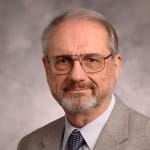
Dr. Barna Szabó
We are pleased to announce that the 45-minute recording of Dr. Szabó’s keynote presentation is now available for playback:
Would You Like a Simulation Governance Briefing?
Would you like to connect with Dr. Szabó on this topic? Feel free to complete the following form and we will be happy to schedule a Simulation Governance briefing with you:
At this year's ASIP 2023 Conference in Denver, CO, ESRD provided a 2-hour training course titled “Enhancements in StressCheck v12.0 for DaDT Analysis of 3D Fastened Connections”, presented a technical paper titled "Experimental Validation of DTA Modeling of Bonded Wing Skin Repairs", and passed out 3D printed F-35 and C-130 models at our booth inside the Gaylord Rockies Resort & Conference Center.
Read the summary of conference events, view the ASIP training course content (including the presentation and demo videos), and schedule a preview demo of the upcoming StressCheck v12!
We need your vote! ESRD is planning a Summer 2019 webinar on a "hot" Aerospace & Defense application, modeling best practice or StressCheck feature, and we are requesting your participation in selecting the next topic.
Additionally, ESRD is hiring engineers! Check out the job postings at the end of the survey.
Last month we asked our FEA-minded engineering community how we should improve StressCheck Professional, and the results are in! Find out what was most important to your fellow StressCheck users and FEA enthusiasts.
“Aerospace materials scientists and structural engineers now have a new state-of-the-art software product called StressCheck, which provides efficient and reliable analysis tools for composite bonded aircraft structures. A composites research team from the aeronautics industry, known as the Composites Affordability Initiative (CAI), has just completed an extensive study of current capabilities in the area of failure analysis tools for composite bonded joints. This study led the CAI team to unanimously choose StressCheck as the software tool to replace as well as radically improve existing industry standard software currently used to size bonded joints.”
 Serving the Numerical Simulation community since 1989







Leave a Reply
We appreciate your feedback!
You must be logged in to post a comment.