
Watch Teaser Video for the NAFEMS Coil Spring FEA Puzzler
The deadline for the NAFEMS coil spring “FEA Puzzler” submissions has been extended through June 1st! View a teaser video of ESRD’s StressCheck model and qualitative deformation results.
 Serving the Numerical Simulation community since 1989
The deadline for the NAFEMS coil spring “FEA Puzzler” submissions has been extended through June 1st! View a teaser video of ESRD’s StressCheck model and qualitative deformation results.

ESRD, Inc. will be exhibiting and providing a training course on verifying the accuracy of engineering simulations at the AA&S/PS&S Conference 2019 in Washington, D.C. from April 22-26, 2019. We hope you will drop by our training course and booth to check out the latest!

This past week at ASIP 2018, ESRD provided a training course titled “Modeling Fastened Connections: Hierarchic Approaches Discussion and Demo”, chatted with ASIP attendees, provided StressCheck demos, and exhibited at our booth.
Read the summary of events and download the ASIP training course presentation, demo video and selected StressCheck model files!

We need your vote! ESRD is planning a June 20th, 2018 webinar on a must-see Aerospace & Defense application, and we are requesting your participation in selecting the next topic. […]

Strategies for the democratization & standardization of recurring simulation tasks via ESRD’s CAE Handbook will be demonstrated.
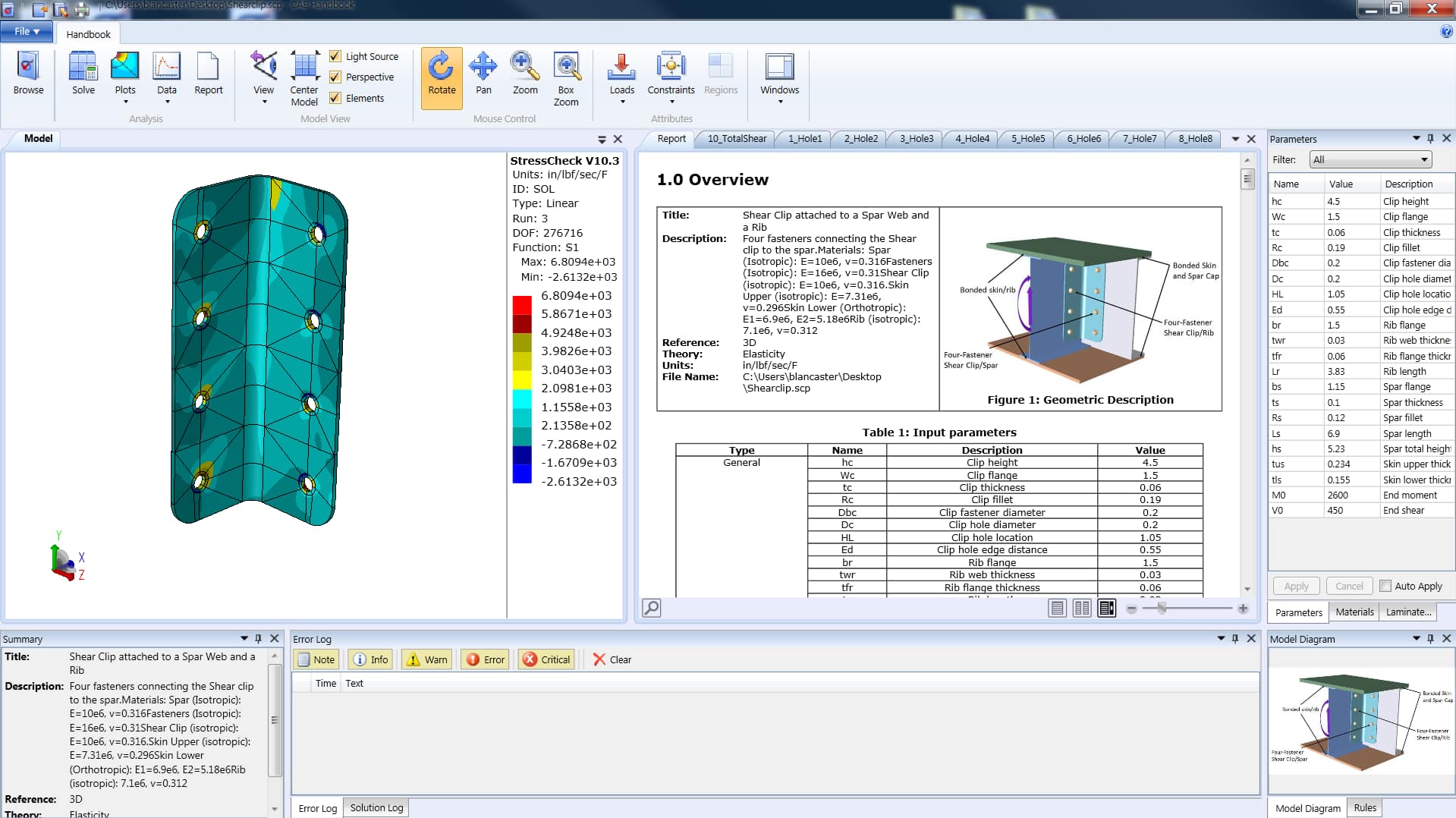
ESRD’s CAE Handbook
In this 45-minute webinar, hosted by the Altair Partner Alliance (APA), we will discuss how ESRD’s CAE Handbook modernizes and streamlines the implementation of digital engineering handbooks for the standardization of corporate process workflows.
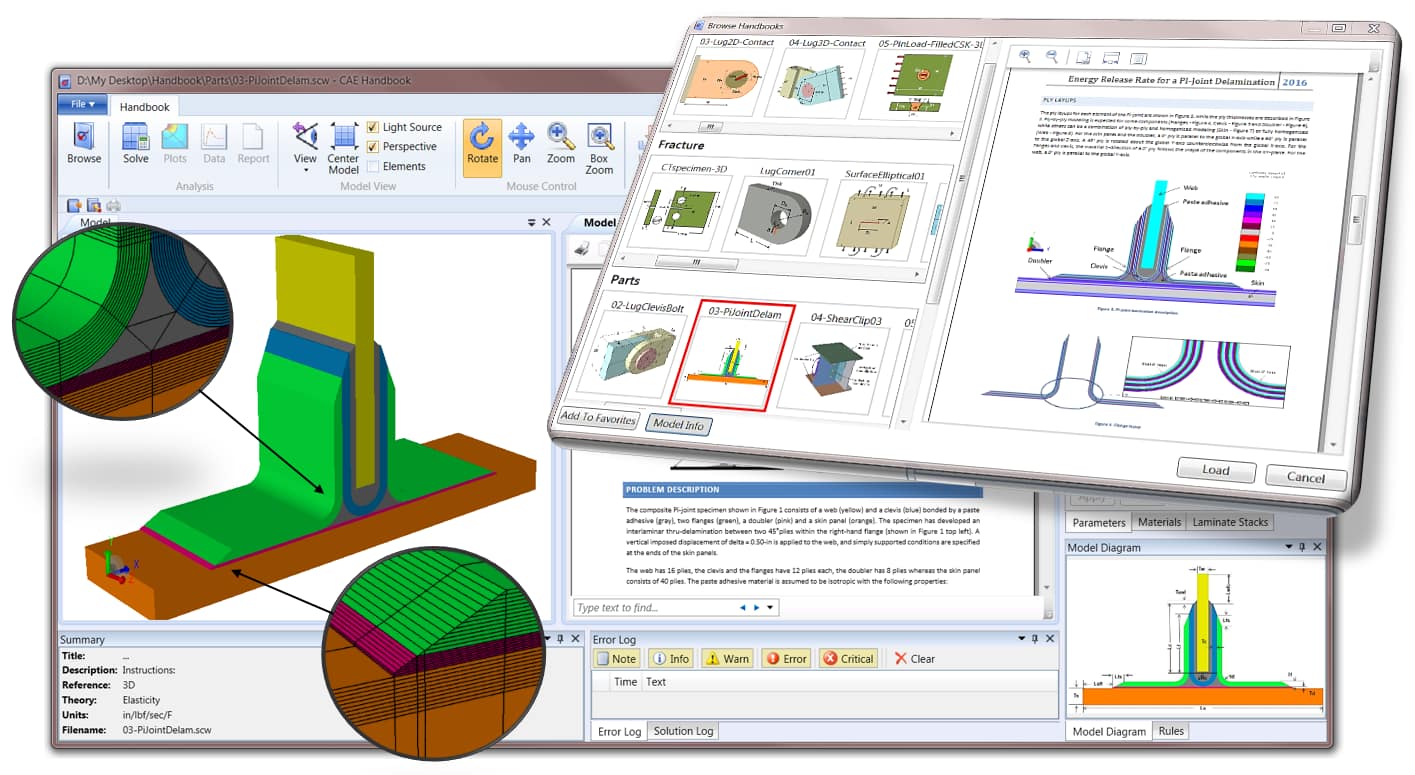
The CAE Handbook framework allows for the corporate standardization of many engineering computational simulations. This is done by allowing companies to build an electronic or digital handbook models that captures corporate intellectual property. This enables non-FEA experts to solve many basic simulations that historically have been simplified in the form of Microsoft Excel engineering computation spreadsheets, and internally developed engineering programs that are only fully understood by the engineers who develop them. CAE Handbook guarantees consistent results and provides an objective measure of the quality of the solution.
Topics covered include:

Strategies will be explored for developing mathematical models to support condition-based maintenance (CBM) decisions via a practical case study.

This webinar, hosted by ESRD partner Revolution in Simulation, will present a case study in which the goal was the development of a mathematical model for supporting condition-based maintenance (CBM) decisions.
The model was designed for estimating the remaining fatigue service life of high-value mechanical components, given their service history and that specific flaws (such as corrosion defects) have been discovered in them, thus enabling CBM to move damaged component removals from unscheduled to scheduled maintenance action.

This 15-minute recorded presentation was prepared for the NAFEMS World Congress (Salzburg, October 2021). It highlights the mission-oriented nature of simulation governance and presents an example of a model development project.
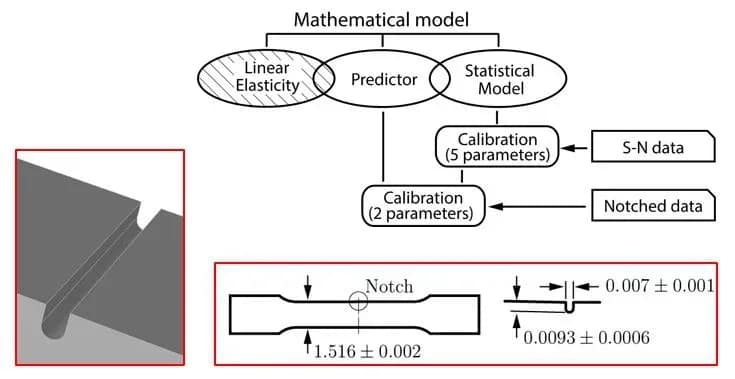
The main ideas of, and the case for, simulation governance are easy to understand. The development and implementation of a plan for simulation governance is not at all easy, however, and requires careful consideration of the mission, and associated predictive model(s), at hand.
In this pre-recorded webinar, ESRD Chairman Dr. Barna Szabó addresses some of the key issues of simulation governance, including how model development must adhere to the requirements of simulation governance in order to minimize risk and magnify reliability.
Note: this webinar was originally prepared by Drs. Szabó and Actis for the NAFEMS World Congress 2021 session on Simulation Governance.

Strategies for mastering StressCheck Professional for a variety of Aerospace & Defense engineering applications, and a review of the available training options and online resources, will be explored.

In this 2 hour webinar we will review training approaches focused on applications to make numerical simulation via finite element analysis S.A.F.E.R. - Simple, Accurate, Fast, Efficient, and Reliable.

Strategies for the automation of durability and damage tolerance (DaDT) solutions, driven by Sim Apps designed for the computation of FEA-based total beta factors, will be explored.
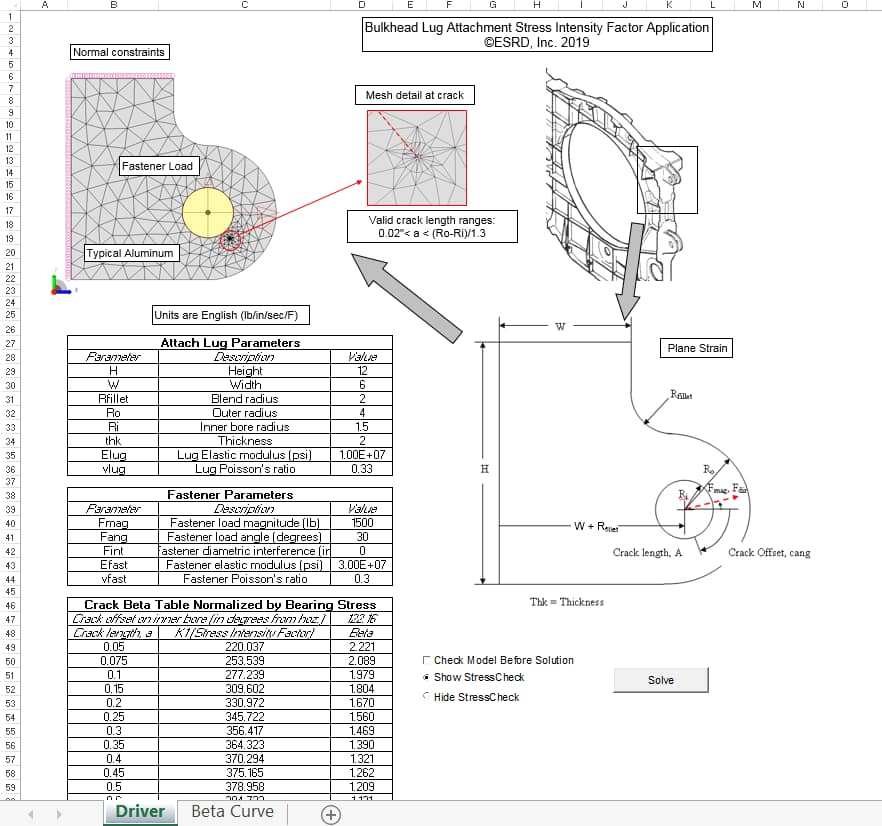
In this pre-recorded 2 hour webinar we will discuss the creation of Sim Apps for the automatic generation of complex, solution-verified 2D and 3D beta factors via the integration of StressCheck's parametric FEA engine, the Windows Component Object Model (COM) and Microsoft Excel VBA.
In Part 1 of this webinar series, the following topics are presented:
In Part 2 of this webinar series, the following topics are presented:

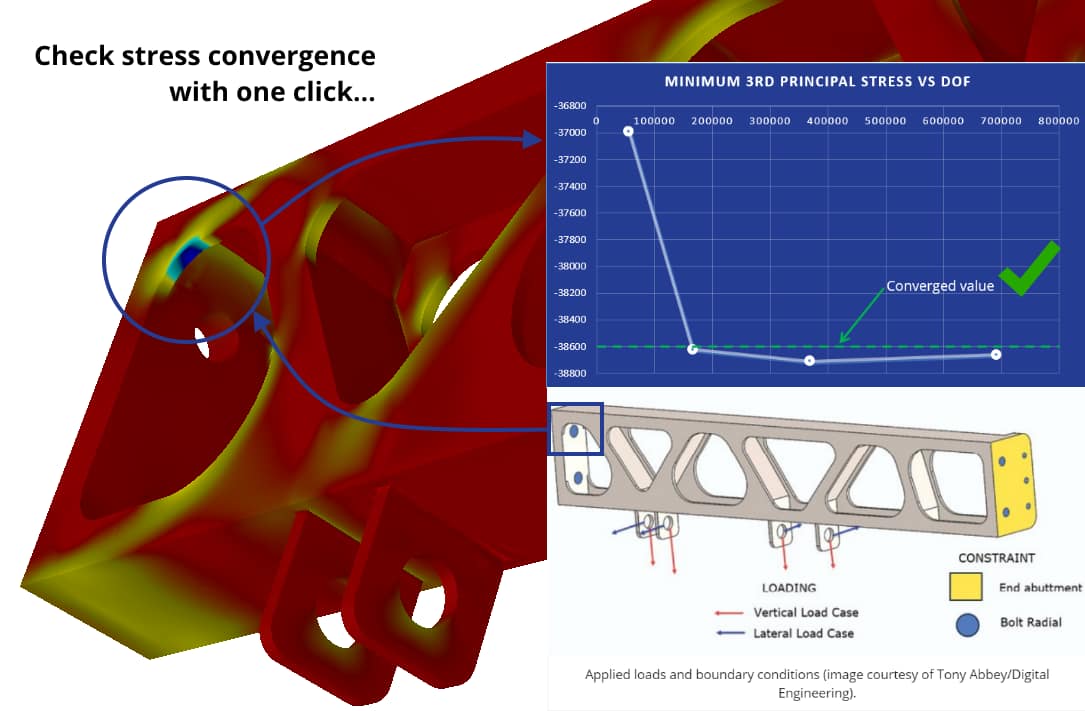
Strategies for verifying the accuracy of engineering data will be explored, including best practices and common pitfalls engineers may encounter when assessing the quality of the results.




© 2026 · Engineering Software Research & Development, Inc. | Terms & Conditions | Privacy & Cookie Policy | Software License Agreement | Software Maintenance and Technical Support Policy