• About
    • Who We Are
    • Partners & Providers
    • News & Events
    • The ESRD Blog
    • Careers
    • Contact Us
  • Applications
    • What We Solve
    • Detailed Stress
    • Composites
    • Fracture Mechanics
    • Residual Stress
    • Sim Apps
  • Products
    • What We Develop
    • StressCheck Professional
      • StressCheck Core
      • Solvers
      • Advanced Modules
      • Utilities
      • Academic Licensing
    • StressCheck Apps
      • CAE Handbook
      • StressCheck Tool Box
    • Product Updates
  • Support
    • How We Can Help
    • Training
    • Webinars
    • Quick Start Guide
    • Help Documentation
    • Software FAQ’s
  • Simulation
    • How We Simulate
    • Benchmarks
    • Simulation Governance
    • History of FEA
    • Dictionary & Terms
  • Resources
    • Browse Our Resource Library
    • White Papers
    • Case Studies
    • Product Demos
    • StressCheck Tutorials
Serving the Numerical Simulation community since 1989
  • Contact Us
  • Register
Login
Forgot Password?
Join Us
ESRDESRD
ESRDESRD
  • About
    • Who We Are
    • Partners & Providers
    • News & Events
    • The ESRD Blog
    • Careers
    • Contact Us
  • Applications
    • What We Solve
    • Detailed Stress
    • Composites
    • Fracture Mechanics
    • Residual Stress
    • Sim Apps
  • Products
    • What We Develop
    • StressCheck Professional
      • StressCheck Core
      • Solvers
      • Advanced Modules
      • Utilities
      • Academic Licensing
    • StressCheck Apps
      • CAE Handbook
      • StressCheck Tool Box
    • Product Updates
  • Support
    • How We Can Help
    • Training
    • Webinars
    • Quick Start Guide
    • Help Documentation
    • Software FAQ’s
  • Simulation
    • How We Simulate
    • Benchmarks
    • Simulation Governance
    • History of FEA
    • Dictionary & Terms
  • Resources
    • Browse Our Resource Library
    • White Papers
    • Case Studies
    • Product Demos
    • StressCheck Tutorials

New Webinar: Simulation Governance & Management (NWC 2021)

Home EventsConferenceNew Webinar: Simulation Governance & Management (NWC 2021)

New Webinar: Simulation Governance & Management (NWC 2021)

September 8, 2021 Conference, News, S.A.F.E.R. Simulation, Webinars

In this 15-minute pre-recorded webinar, ESRD Chairman Dr. Barna Szabó addresses some of the key issues of simulation governance, including how model development must adhere to the requirements of simulation governance in order to minimize risk and increase reliability.

Following is the abstract of the webinar (via NAFEMS):

Advancements in predictive computational science make it possible to increase reliance of numerical simulation, necessitating fewer physical experiments for substantial savings in time and costs of product development projects. The first and perhaps the most challenging obstacle to full realization of the benefits of predictive computational science is a widespread misunderstanding of what numerical simulation is.

Most managers and many individuals who present themselves as experts in numerical simulation confuse numerical simulation with “finite element modeling” or “numerical modeling“. Those are outdated concepts, responsible for much of the disappointing results that caused widespread loss of confidence in the usefulness and reliability of numerical simulation. Current simulation and data management practices will have to be revised in order to meet the technical requirements of predictive computational science.

The presentation focuses on the central role of simulation governance and management in the coordination of experimental and analytical work necessary for proper use of the tools and techniques of predictive computational science with the objective to maximize the reliability of computed information.

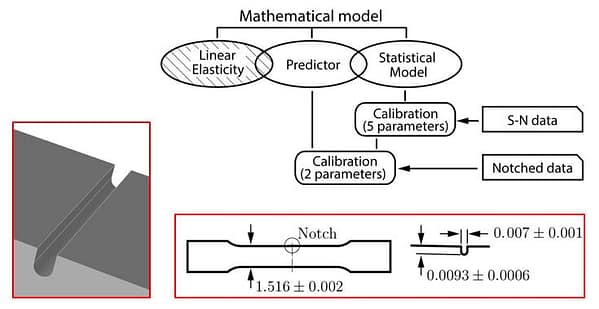
The presentation outlines the methodology of model development in the applied sciences, the essential constituents of which are the formulation, calibration and ranking of mathematical models, data and solution verification, validation and uncertainty quantification. It will be shown that consideration of the size of the domain of calibration is essential. Without such consideration just about any model, even pseudoscientific models, can be calibrated on a sufficiently small domain of calibration.

The presentation also highlights the differences between numerical simulation and finite element modeling. Understanding these concepts and procedures is an indispensable prerequisite to any successful implementation of a Simulation Governance plan. Recognizing that technology changes and the available information increases over time, planning must incorporate data management and systematic updates of simulation practices so as to take advantage of new information and advancements in technology.

Watch the Webinar Recording
Download the Webinar Slides (PDF)

Watch the Live Webinar at NAFEMS World Congress (NWC) 2021

The webinar will also be presented live by Dr. Szabó on 10/27/2021 @ 17:30 local Salzburg time (CEST) on-site in Room W, as well as virtually (NWC 2021 is a hybrid event) as part of the Simulation Governance sessions (L6).

To register for NWC 2021 as either an on-site attendee or online attendee, click the below button:

Register for NWC 2021

Tags: FatigueNAFEMSNumerical SimulationSimulation GovernanceSolution VerificationWebinar
0

You also might be interested in

S.A.F.E.R. Numerical Simulation for Structural Analysis in the Aerospace Industry Part 2: Challenges with Legacy FEA
F-18 Military Jet isolated on white.

S.A.F.E.R. Numerical Simulation for Structural Analysis in the Aerospace Industry Part 2: Challenges with Legacy FEA

Dec 5, 2017

In this second of our multi-part series on “S.A.F.E.R. Numerical Simulation for Structural Analysis in the Aerospace Industry” we will distill what the need for higher-fidelity engineering analysis means to stress analysis groups and the challenges experienced when using legacy simulation and analysis technologies based on the finite element method (FEM). [...]

What Are the Key Quality Checks for FEA Solution Verification?

What Are the Key Quality Checks for FEA Solution Verification?

Mar 5, 2019

In this S.A.F.E.R. Simulation post, we'll explore Five Key Quality Checks for verifying the accuracy of FEA solutions. To help us drive the conversation in a practical manner, we selected a widely available and well understood benchmark problem to model, solve and perform each Key Quality Check using ESRD's flagship FEA software, StressCheck Professional.

StressCheck v11 Update 1 Released!

StressCheck v11 Update 1 Released!

Jun 17, 2021

ESRD is pleased to announce that we've released StressCheck Professional v11 Update 1. In addition to all the improvements introduced with the release of StressCheck v11, in Update 1 we have optimized the Solve and Results panes for maximum efficiency and improved user flow.

Leave a Reply

We appreciate your feedback!
Cancel Reply

You must be logged in to post a comment.

Looking for Resources?

Interested in a Demo, Evaluation or Purchase?

Have a Software Question, Issue or Feature Request?

Recent News & Events

  • Trustworthiness in Simulation: Credibility or Decision-grade Reliability?
  • Beyond the Black Box: Explainable AI Requires Explainable Simulation
  • Turtle Shells and Legacy Finite Element Codes: Evolutionary Constraints in the Age of Explainable AI

Quick Links

  • Quick Start Guide
  • Documentation
  • Software FAQs
  • Software Demos

Testimonials

  • “An advanced modeling and analysis tool for complex composite structures is generating benefits across the aerospace industrial base. StressCheck [Composites] is widely viewed as the next-generation composite joint strength tool.”


    Air Force Research Laboratory (AFRL)

Testimonials

When performing parametric structural analysis, ESRD’s p-element StressCheck FEA software is always my preferred choice due to the excellent solution quality, parametric framework, and superior computational efficiency. In fact, I recently used StressCheck to generate stress intensity factors along a parametrically defined elliptical crack-tip across 3,000 unique geometric configurations. Considering multi-body contact was present and all simulations were performed using a laptop, this was a task well suited for StressCheck.

Dr. Lee Zambino, Researcher, Villanova University

Member Portal

  • Member Registration
  • Member Login

Contact Us

© 2026 · Engineering Software Research & Development, Inc. | Terms & Conditions | Privacy & Cookie Policy | Software License Agreement | Software Maintenance and Technical Support Policy

Prev Next

We use cookies on our website to give you the most relevant experience by remembering your preferences and repeat visits, as outlined in our Cookie Policy. You may adjust your cookie preferences within .

ESRD
Powered by  GDPR Cookie Compliance
Privacy Overview

This website uses cookies to improve your experience while you navigate through the website. Out of these, the cookies that are categorized as necessary are stored on your browser as they are essential for the working of basic functionalities of the website. We also use third-party cookies that help us analyze and understand how you use this website. These cookies will be stored in your browser only with your consent. You also have the option to opt-out of these cookies. But opting out of some of these cookies may affect your browsing experience.

Strictly Necessary Cookies

Strictly Necessary Cookies should be enabled at all times so that we can save your preferences for cookie settings.