• About
    • Who We Are
    • Partners & Providers
    • News & Events
    • The ESRD Blog
    • Careers
    • Contact Us
  • Applications
    • What We Solve
    • Detailed Stress
    • Composites
    • Fracture Mechanics
    • Residual Stress
    • Sim Apps
  • Products
    • What We Develop
    • StressCheck Professional
      • StressCheck Core
      • Solvers
      • Advanced Modules
      • Utilities
      • Academic Licensing
    • StressCheck Apps
      • CAE Handbook
      • StressCheck Tool Box
    • Product Updates
  • Support
    • How We Can Help
    • Training
    • Webinars
    • Quick Start Guide
    • Help Documentation
    • Software FAQ’s
  • Simulation
    • How We Simulate
    • Benchmarks
    • Simulation Governance
    • History of FEA
    • Dictionary & Terms
  • Resources
    • Browse Our Resource Library
    • White Papers
    • Case Studies
    • Product Demos
    • StressCheck Tutorials
Serving the Numerical Simulation community since 1989
  • Contact Us
  • Register
Login
Forgot Password?
Join Us
ESRDESRD
ESRDESRD
  • About
    • Who We Are
    • Partners & Providers
    • News & Events
    • The ESRD Blog
    • Careers
    • Contact Us
  • Applications
    • What We Solve
    • Detailed Stress
    • Composites
    • Fracture Mechanics
    • Residual Stress
    • Sim Apps
  • Products
    • What We Develop
    • StressCheck Professional
      • StressCheck Core
      • Solvers
      • Advanced Modules
      • Utilities
      • Academic Licensing
    • StressCheck Apps
      • CAE Handbook
      • StressCheck Tool Box
    • Product Updates
  • Support
    • How We Can Help
    • Training
    • Webinars
    • Quick Start Guide
    • Help Documentation
    • Software FAQ’s
  • Simulation
    • How We Simulate
    • Benchmarks
    • Simulation Governance
    • History of FEA
    • Dictionary & Terms
  • Resources
    • Browse Our Resource Library
    • White Papers
    • Case Studies
    • Product Demos
    • StressCheck Tutorials

‘What’s New and Improved in StressCheck Professional’ Webinar Recording Now Available

Home EventsConference‘What’s New and Improved in StressCheck Professional’ Webinar Recording Now Available

‘What’s New and Improved in StressCheck Professional’ Webinar Recording Now Available

February 15, 2023 Conference, News, Webinars
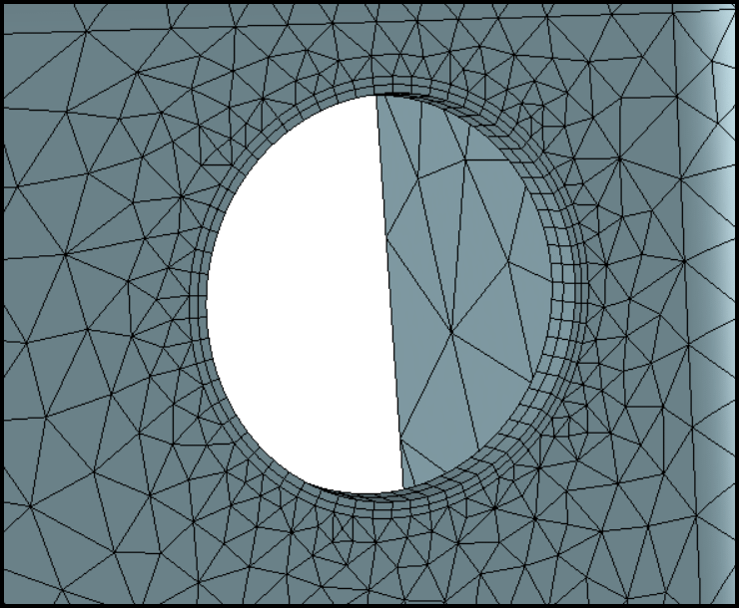
Mixed (hexa/penta/tetra) mesh boundary layer available with the release of StressCheck v11.1

On February 7, 2023 a 2-hour webinar titled “What’s New and Improved in StressCheck Professional” was provided by ESRD’s Brent Lancaster to a group of StressCheck enthusiasts. This webinar provided demonstrations of the “latest and greatest” enhancements in StressCheck v11.1, and a look toward future development activities happening in StressCheck v11.2. In case you missed it, the webinar slides and the webinar recording are now available!


Some highlights of the webinar included:

  • Overview of recent features and enhancements already implemented in StressCheck Professional
  • Demonstration of key features and enhancements available in StressCheck v11.1
  • Overview of current development activities and future plans for StressCheck Professional
  • Demonstration of key features and enhancements expected with the release of StressCheck v11.2
  • Open discussion and Q&A

Many thanks to the StressCheck enthusiasts who attended the live webinar and subsequent Q&A session, as well as the StressCheck enthusiasts taking the time from their busy schedules to view the webinar recording.

As always, feel free to contact us with any questions or concerns about StressCheck Professional and we’ll be happy to assist!


View the Webinar Recordings

Clicking on the above link will redirect you to the original webinar post and will automatically scroll you to the webinar recordings section. For your viewing convenience the 2-hour webinar recording was edited into two parts, each approximately 57 minutes in length.


Download Webinar Slides (PDF)

Clicking the above link will redirect you to the ESRD Resource Library where you may download a PDF of the PowerPoint slides presented during the webinar. Note: as the webinar slides are in PDF format, they do not included the video demonstrations. These demonstrations can be found individually at the following links (or viewed from the webinar recordings):

  • StressCheck Tutorial: Automeshing Thin Regions with Pentas and Hexas via the Thin Section Method
  • StressCheck Tutorial: Mixed (Hexa/Penta) Boundary Layer Automesh Refinement
  • StressCheck Tutorial: Crack Front Automeshing with Mixed Mesh, Integration Layer and Grade Toward Ends Options
  • StressCheck Tutorial: Parametric TLAP Scaling for Nonlinear Events


Interested in a StressCheck Training Course?

If you would like to learn more about mastering StressCheck via an instructor-led training course, virtual or on-site, please complete the form below and we will be happy to reach out to you at your earliest convenience.

Please indicate an organization, such as the agency, company or academic institution to which you are affiliated.
Note: all lecture materials are made available after completion.
On-site = at your location, Off-site = at ESRD HQ in St. Louis, Web-based = via Teams, Webex, GoTo Meeting or a preferred video conferencing, maximum of 3 hours per day.
Loading
Tags: DemosNumerical SimulationResource LibraryStressCheckWebinar
0

You also might be interested in

ESRD Partners with Industry Leaders for Webinars on 3D Crack Growth & Sim App Development
ESRD is hosting webinars on July 17th and July 29th, both at 1:00 pm EST.

ESRD Partners with Industry Leaders for Webinars on 3D Crack Growth & Sim App Development

Jul 3, 2019

Want to learn from the experts in FEA-based Simulation Application (Sim App) development for standardization & automation of complex engineering analysis tasks, such as 3D fatigue crack growth, 3D ply-by-ply laminated composite analysis or other challenging applications you'd like to safely put into the hands of non-experts? This July, ESRD will be partnering with several industry leaders to provide not one but TWO stimulating webinars on the latest in FEA-based Sim App development.

ESRD’s CAE Handbook Now Available via the Altair Partner Alliance

ESRD’s CAE Handbook Now Available via the Altair Partner Alliance

Mar 9, 2021

In late February 2021, ESRD's CAE Handbook was officially added to the Altair Partner Alliance (APA). CAE Handbook provides an elegant and intuitive framework for deploying StressCheck-powered digital handbook solutions.

CAE Handbook Featured in Digital Engineering May 2018
T-Joint Handbook Model

CAE Handbook Featured in Digital Engineering May 2018

May 1, 2018

In the May 2018 issue of Digital Engineering, contributing editor Tony Abbey profiled ESRD's CAE Handbook as part of his "new series of overview articles looking at simulation and optimization software products." Read more [...]

Leave a Reply

We appreciate your feedback!
Cancel Reply

You must be logged in to post a comment.

Looking for Resources?

Interested in a Demo, Evaluation or Purchase?

Have a Software Question, Issue or Feature Request?

Recent News & Events

  • Trustworthiness in Simulation: Credibility or Decision-grade Reliability?
  • Beyond the Black Box: Explainable AI Requires Explainable Simulation
  • Turtle Shells and Legacy Finite Element Codes: Evolutionary Constraints in the Age of Explainable AI

Quick Links

  • Quick Start Guide
  • Documentation
  • Software FAQs
  • Software Demos

Testimonials

  • The software provides a highly reliable and user-friendly production stress analysis tool that will replace the Finite Element Method (FEM) tools and failure criteria the experts currently employ for analyzing bonded joints. The software includes an FEM-based handbook format, which allows non-experts to utilize models prepared by specialists. The handbook problems include built-in failure criteria, geometric and material nonlinearities, and the modern FEM technology provides better error control and the treatment of very large aspect ratios.”

    Dr. Stephen P. Engelstad
    Technical Fellow, Lockheed Martin Aeronautics Company, Structural Methods and Analysis

Testimonials

“At DST Group, we have effectively used StressCheck over the last 10 years to determine accurate stress intensity factors. The results have been used to improve our residual strength and structural life estimates for aircraft in service with the Royal Australian Airforce, including C-130, P-3C and F/A-18 A/B. We have found it to be extremely easy to use and a very versatile code with which to create parametric models.

We have recently used StressCheck to obtain improved stress intensity factor solutions (Improved stress intensity factors for selected configurations in cracked plates and Improved stress intensity factors for a single corner crack at a loaded fastener hole) for five key generic configurations. These transferable parametric results have been published externally. One specific example is the non-linear contact analysis of a cracked, filled fastener hole, with both fastener and remote plate loading.”

Dr. Manfred Heller, Head, Structural & Damage Mechanics, DST Group

Member Portal

  • Member Registration
  • Member Login

Contact Us

© 2026 · Engineering Software Research & Development, Inc. | Terms & Conditions | Privacy & Cookie Policy | Software License Agreement | Software Maintenance and Technical Support Policy

Prev Next

We use cookies on our website to give you the most relevant experience by remembering your preferences and repeat visits, as outlined in our Cookie Policy. You may adjust your cookie preferences within .

ESRD
Powered by  GDPR Cookie Compliance
Privacy Overview

This website uses cookies to improve your experience while you navigate through the website. Out of these, the cookies that are categorized as necessary are stored on your browser as they are essential for the working of basic functionalities of the website. We also use third-party cookies that help us analyze and understand how you use this website. These cookies will be stored in your browser only with your consent. You also have the option to opt-out of these cookies. But opting out of some of these cookies may affect your browsing experience.

Strictly Necessary Cookies

Strictly Necessary Cookies should be enabled at all times so that we can save your preferences for cookie settings.