• About
    • Who We Are
    • Partners & Providers
    • News & Events
    • The ESRD Blog
    • Careers
    • Contact Us
  • Applications
    • What We Solve
    • Detailed Stress
    • Composites
    • Fracture Mechanics
    • Residual Stress
    • Sim Apps
  • Products
    • What We Develop
    • StressCheck Professional
      • StressCheck Core
      • Solvers
      • Advanced Modules
      • Utilities
      • Academic Licensing
    • StressCheck Apps
      • CAE Handbook
      • StressCheck Tool Box
    • Product Updates
  • Support
    • How We Can Help
    • Training
    • Webinars
    • Quick Start Guide
    • Help Documentation
    • Software FAQ’s
  • Simulation
    • How We Simulate
    • Benchmarks
    • Simulation Governance
    • History of FEA
    • Dictionary & Terms
  • Resources
    • Browse Our Resource Library
    • White Papers
    • Case Studies
    • Product Demos
    • StressCheck Tutorials
Serving the Numerical Simulation community since 1989
  • Contact Us
  • Register
Login
Forgot Password?
Join Us
ESRDESRD
ESRDESRD
  • About
    • Who We Are
    • Partners & Providers
    • News & Events
    • The ESRD Blog
    • Careers
    • Contact Us
  • Applications
    • What We Solve
    • Detailed Stress
    • Composites
    • Fracture Mechanics
    • Residual Stress
    • Sim Apps
  • Products
    • What We Develop
    • StressCheck Professional
      • StressCheck Core
      • Solvers
      • Advanced Modules
      • Utilities
      • Academic Licensing
    • StressCheck Apps
      • CAE Handbook
      • StressCheck Tool Box
    • Product Updates
  • Support
    • How We Can Help
    • Training
    • Webinars
    • Quick Start Guide
    • Help Documentation
    • Software FAQ’s
  • Simulation
    • How We Simulate
    • Benchmarks
    • Simulation Governance
    • History of FEA
    • Dictionary & Terms
  • Resources
    • Browse Our Resource Library
    • White Papers
    • Case Studies
    • Product Demos
    • StressCheck Tutorials

ESRD Participates in A&D Workshops Focused on Improving DaDT Technology

Home EventsESRD Participates in A&D Workshops Focused on Improving DaDT Technology

ESRD Participates in A&D Workshops Focused on Improving DaDT Technology

September 27, 2017 Events, News
SAINT LOUIS, MISSOURI – September 27, 2017

Engineering Software Research & Development, Inc. (ESRD) recently participated in two Aerospace & Defense industry workshops in North America, both intended to advance numerical simulation technology for the prediction and extension of airframe component life.
AFGROW Workshop 2017

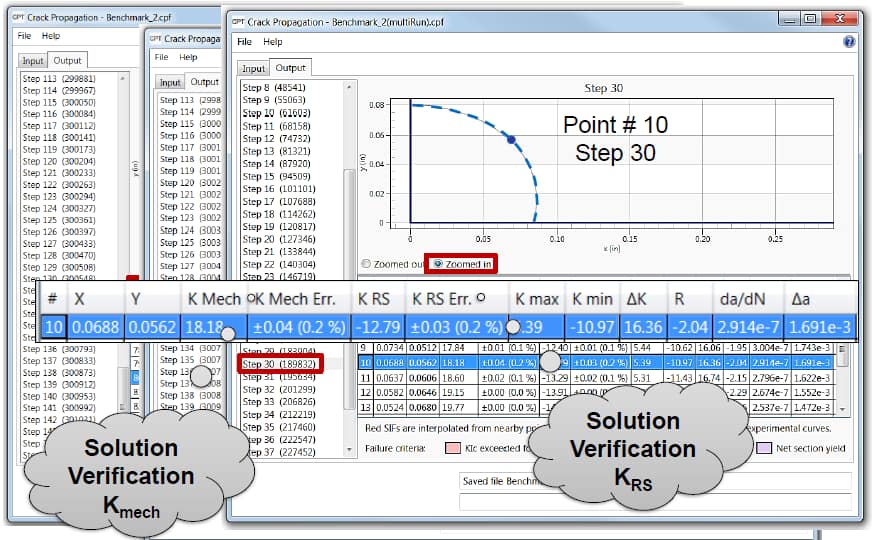
Dr. Ricardo Actis, ESRD, Inc. President and CEO, presented a paper “Deployment of Smart Simulation Apps in Support of DaDT Activities” at the AFGROW Workshop 2017, held in Layton, UT from September 19-20, 2017.  Here is an excerpt from his abstract:

Democratization of numerical simulation through the development and dissemination of expert-designed “engineering simulation apps” is rapidly gaining attention for durability and damage tolerance (DaDT) applications. Such apps must satisfy certain technical requirements to ensure their reliable use due to the high accuracy requirements in the computation of fatigue crack propagation life. Proper application of numerical simulation procedures requires expertise in computational engineering that is not widely or readily available. Standardization deployed by means of Smart Engineering Simulation Apps (SESA) can leverage this expertise for recurring analysis tasks, similar to the expertise of specialists in applied mechanics made available through engineering handbooks. Because classical handbooks have limitations in model complexity and scope, SESA developed by expert analysts can deploy verified solutions obtained by numerical means allowing models of much greater complexity for users who do not need to have expertise in numerical simulation technology.

You can find the PDF of the paper in our Resource Library.

ERSI Workshop 2017

Dr. Actis then attended the Engineered Residual Stress Implementation (ERSI) Workshop 2017 in Clearfield, UT from September 21-22, 2017.  This workshop is focused on the development of a damage tolerance methodologies for fatigue crack growth through deep Engineered Residual Stress (ERS) fields.  Sponsored by the US Air Force’s A-10 Airframe Structural Integrity Program (ASIP), the goal of this workshop is to develop a roadmap for the implementation of the beneficial effect of engineered residual stresses within the United States Air Force (USAF) Damage Tolerance Analysis (DTA) fatigue crack growth and lifing programs.
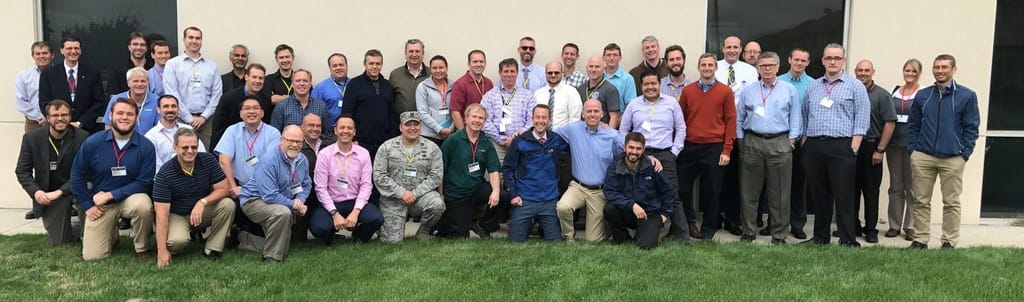
Attendees to the Second ERSI Workshop

Active participation of ESRD, Inc. in workshops like these two demonstrates the company’s deep commitment to collaborating within the A&D industry it serves at levels unusual for providers of engineering simulation software.

Tags: AFGROWDaDTResidual StressWorkshop
0

You also might be interested in

The Kuhn Cycle in the Engineering Sciences

The Kuhn Cycle in the Engineering Sciences

Aug 1, 2024

Model development projects are essentially scientific research projects. As such, they are subject to the operation of the Kuhn Cycle, named after Thomas Kuhn, who identified five stages in scientific research projects: Normal Science, Model Drift, Model Crisis, Model Revolution, and Paradigm Change. The Kuhn cycle is a valuable concept for understanding how mathematical models evolve. It highlights the importance of paradigms in shaping model development and the role of paradigm shifts in the process.

ESRD @ NAFEMS Americas 2017 Wichita Event

Oct 31, 2017

Next week, ESRD will co-sponsor, exhibit and present at the[...]

ESRD to Exhibit and Provide Training Course at ASIP 2017

Oct 20, 2017

ESRD, Inc. will be exhibiting and providing a training course at[...]

Leave a Reply

We appreciate your feedback!
Cancel Reply

You must be logged in to post a comment.

Looking for Resources?

Interested in a Demo, Evaluation or Purchase?

Have a Software Question, Issue or Feature Request?

Recent News & Events

  • Trustworthiness in Simulation: Credibility or Decision-grade Reliability?
  • Beyond the Black Box: Explainable AI Requires Explainable Simulation
  • Turtle Shells and Legacy Finite Element Codes: Evolutionary Constraints in the Age of Explainable AI

Quick Links

  • Quick Start Guide
  • Documentation
  • Software FAQs
  • Software Demos

Testimonials

  • “Small errors in modeling can lead to substantial errors in joint performance prediction. To alleviate this problem, the CAI used the handbook functionality of ESRD Inc.’s (St. Louis, Mo.) trademarked StressCheck P-version finite element software to develop reusable models of typical joints.”

    Dr. John Russell
    Composites World Magazine

Testimonials

“In the case of the through crack configuration, the comparison of experimental and StressCheck derived geometry factors showed a close correlation and were an improvement to solutions provided in AFGROW at the time. Based on the results of this research, StressCheck pin-loaded lug geometry factors have since been incorporated into the AFGROW software.”

Dr. Alten Grandt, Purdue University

Member Portal

  • Member Registration
  • Member Login

Contact Us

© 2026 · Engineering Software Research & Development, Inc. | Terms & Conditions | Privacy & Cookie Policy | Software License Agreement | Software Maintenance and Technical Support Policy

Prev Next

We use cookies on our website to give you the most relevant experience by remembering your preferences and repeat visits, as outlined in our Cookie Policy. You may adjust your cookie preferences within .

ESRD
Powered by  GDPR Cookie Compliance
Privacy Overview

This website uses cookies to improve your experience while you navigate through the website. Out of these, the cookies that are categorized as necessary are stored on your browser as they are essential for the working of basic functionalities of the website. We also use third-party cookies that help us analyze and understand how you use this website. These cookies will be stored in your browser only with your consent. You also have the option to opt-out of these cookies. But opting out of some of these cookies may affect your browsing experience.

Strictly Necessary Cookies

Strictly Necessary Cookies should be enabled at all times so that we can save your preferences for cookie settings.