• About
    • Who We Are
    • Partners & Providers
    • News & Events
    • The ESRD Blog
    • Careers
    • Contact Us
  • Applications
    • What We Solve
    • Detailed Stress
    • Composites
    • Fracture Mechanics
    • Residual Stress
    • Sim Apps
  • Products
    • What We Develop
    • StressCheck Professional
      • StressCheck Core
      • Solvers
      • Advanced Modules
      • Utilities
      • Academic Licensing
    • StressCheck Apps
      • CAE Handbook
      • StressCheck Tool Box
    • Product Updates
  • Support
    • How We Can Help
    • Training
    • Webinars
    • Quick Start Guide
    • Help Documentation
    • Software FAQ’s
  • Simulation
    • How We Simulate
    • Benchmarks
    • Simulation Governance
    • History of FEA
    • Dictionary & Terms
  • Resources
    • Browse Our Resource Library
    • White Papers
    • Case Studies
    • Product Demos
    • StressCheck Tutorials
Serving the Numerical Simulation community since 1989
  • Contact Us
  • Register
Login
Forgot Password?
Join Us
ESRDESRD
ESRDESRD
  • About
    • Who We Are
    • Partners & Providers
    • News & Events
    • The ESRD Blog
    • Careers
    • Contact Us
  • Applications
    • What We Solve
    • Detailed Stress
    • Composites
    • Fracture Mechanics
    • Residual Stress
    • Sim Apps
  • Products
    • What We Develop
    • StressCheck Professional
      • StressCheck Core
      • Solvers
      • Advanced Modules
      • Utilities
      • Academic Licensing
    • StressCheck Apps
      • CAE Handbook
      • StressCheck Tool Box
    • Product Updates
  • Support
    • How We Can Help
    • Training
    • Webinars
    • Quick Start Guide
    • Help Documentation
    • Software FAQ’s
  • Simulation
    • How We Simulate
    • Benchmarks
    • Simulation Governance
    • History of FEA
    • Dictionary & Terms
  • Resources
    • Browse Our Resource Library
    • White Papers
    • Case Studies
    • Product Demos
    • StressCheck Tutorials

ESRD to Exhibit and Present at ASIP 2023

Home EventsConferenceESRD to Exhibit and Present at ASIP 2023

ESRD to Exhibit and Present at ASIP 2023

November 9, 2023 Conference, Events

ESRD, Inc. will be exhibiting, presenting a technical paper (on DTA of bonded repairs) and providing a 2-hour training course in person and virtually at the ASIP Conference 2023 in Denver, CO from November 27-November 30, 2023.  We hope you will drop by our technical presentation, training course and/or booth to check out the latest ESRD developments!

ESRD’s Training Course

A 2-hour training course titled “Enhancements in StressCheck v12.0 for DaDT Analysis of 3D Fastened Joints” will be held Monday, November 27th from 10:00 AM – 12:00 PM MST by ESRD’s Brent Lancaster.  The course description is as follows:

As more DaDT and service life analysis (SLA) engineers look to incorporate the influence of assembly multi-body contact, fastener hole propping and/or fastener load transfer into their beta factor and/or stress intensity factor (SIF) predictions, it is imperative that the numerical simulation of these effects on 3D fracture mechanics parameters can be ascertained without inflicting cumbersome modeling workflows, endless meshing cycles, and high computational costs on the end user. This training course will outline proposed methodologies, guidelines and best practices for ESRD’s StressCheck Professional finite element analysis (FEA) software to perform efficient and accurate DaDT analysis of flawed 3D fastened connections and multi-body contact assemblies, including enhanced automeshing and SIF extraction techniques now available in StressCheck v12.0. In addition, several live demonstrations of technology will be performed for representative use cases.
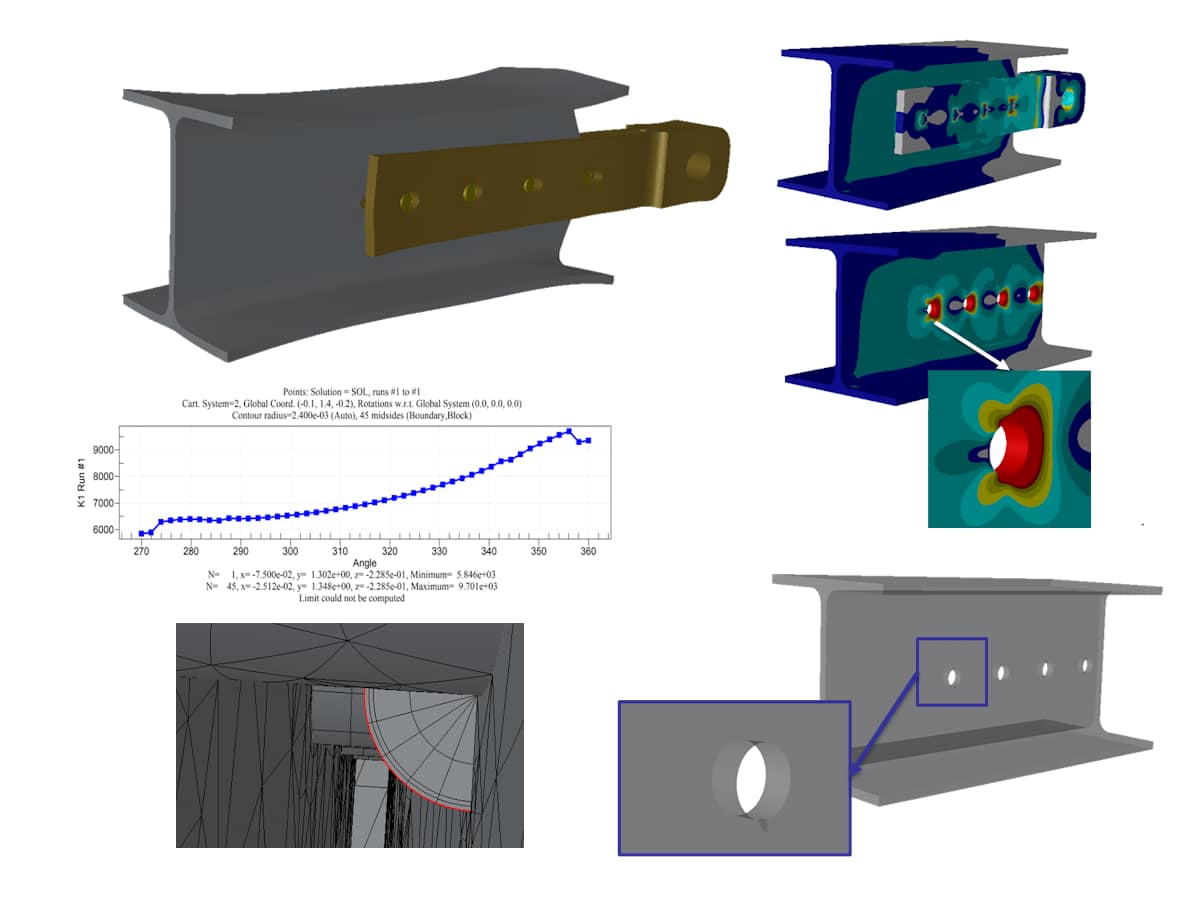
(Clockwise from top left) StressCheck model of a 3D fastened joint assembly; stress contours resulting from multi-body contact (MBC) solution of assembly; Part-thru crack in hole bore of I-beam section within the assembly; 3D crack front mesh; Stress intensity factor (SIF) gradient.

In this 2-hour training course, we will focus on the following topics:

  • StressCheck’s FEA technology implementation for the modeling, meshing and analysis of arbitrarily shaped 3D crack geometries, with and without the local effects of multi-body contact.
  • Strategies for automatic meshing of 3D cracks with high-aspect ratio, 3D-solid pentahedral and hexahedral elements to support high-quality SIF extractions at any location on the crack front.
  • New StressCheck v12.0 method to support multi-body contact assembly meshing, auto-detection of contact regions, and automatic assignment of contact pairs for 3D solid bodies.
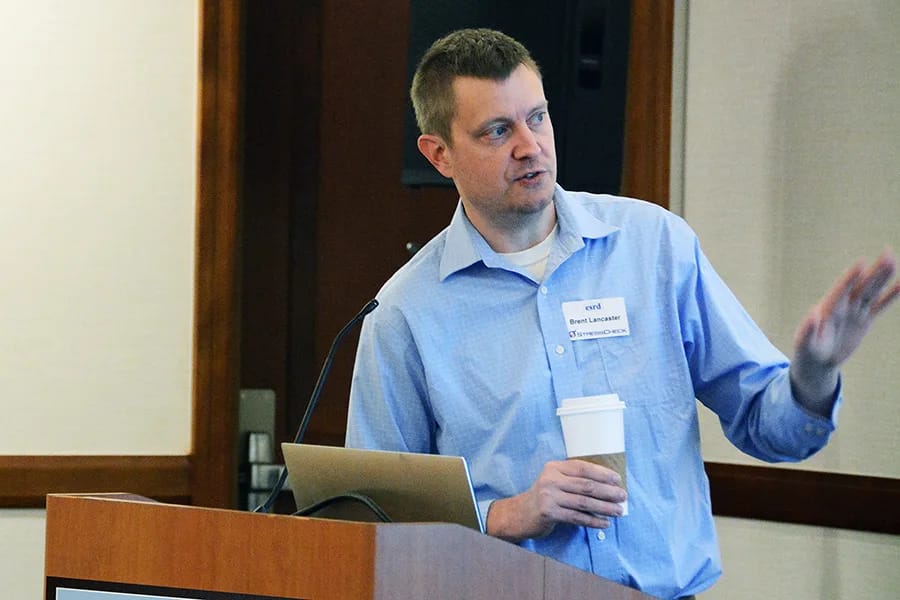
Brent Lancaster presents a training course at ASIP 2022.

The training course content will be based on concepts from the following resources, available on ESRD’s Resource Library and online documentation:

  • ASIP 2018 Training – Modeling Fastened Connections: Hierarchic Approaches Discussion and Demo
  • Helpful Hints and Tips: 3D Stiffened Lug Stress + Crack SIF Analyses
  • Helpful Hints and Tips: Interference Fit Bushing + SIFs
  • StressCheck Demo: Part-Thru Crack SIFs for Stiffened Lug
  • StressCheck Tutorial: 3D Elliptical Part-Thru Crack with Multi-Body Contact
  • StressCheck Tutorial: Filled vs Open Hole SIF Comparison for 3D Offset Hole


ESRD’s Technical Presentation

A 30-minute technical presentation titled “Experimental Validation of DTA Modeling of Bonded Wing Skin Repairs” and authored by Mr. Brian Lockwood (ESRD), Ms. Laura Pawlikowski (Warner Robins ALC) and Dr. Scott Prost-Domasky (AP/ES) will be presented by Brian Lockwood on Thursday, November 30th at 10:30 AM MST.
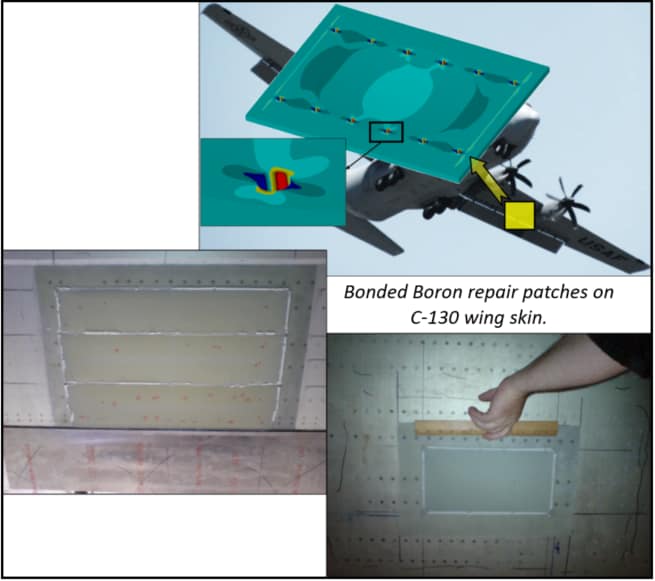
(Clockwise from top right) StressCheck fringe plot of C-130 wing skin stresses; rectangular bonded boron repair patches on C-130 wing skin.

As the principal investigator on this USAF SBIR-funded project, Brian will be presenting an update to his work so far in utilizing StressCheck’s finite element analysis implementation to assess the effectiveness of bonded skin repairs on the C-130 center wing. The technical presentation description is as follows:

This presentation is a follow-up to ESRD’s 2022 ASIP presentation titled “DTA of Bonded Repairs on the Wing Skin of the C-130 Using Finite Elements.” That presentation explored a robust method for finite element analysis of bonded skin repairs from the perspective of both static strength and fatigue crack growth. The proposed analysis methodology was presented in a comparative sense, examining a number of criteria in the skin in an undamaged state, a damaged state and a repaired state, in order to allow the analyst to make an assessment of repair effectiveness without detailed knowledge of either the exact boundary conditions of the problem, or of the intricacies of the model itself. One of the criteria for a patch to be deemed effective is that the fatigue life of the skin be at or above that of the pristine configuration.

Given the sparse nature of research on the topic of crack growth under bonded repair patches, ESRD partnered with AP/ES to conduct an experimental program to investigate in detail how a small initial flaw propagates in the aluminum skin under a titanium repair up through failure. Experiments were performed alongside blind predictions of life and crack morphology using ESRD’s research tool, CPAT. Additionally, statistical analysis was performed to assess confidence in the predictions. Given the aleatory uncertainty associated with the available crack growth data for the specimen material, it was important that predictions of fatigue life be accompanied by a confidence level when comparing them with experimental outcomes. Because most of the crack propagation occurred under the repair, a marker band spectrum was used during the test and the crack-cycle data was constructed from fractographic examination. The experimental program covered three specimen configurations:

  • Undamaged skin with a surface crack or a corner crack at a hole.
  • Skin with a grindout (to remove hypothetical corrosion damage) and either a surface crack at the bottom of the grindout or a corner crack at a hole located at the center of the grindout.
  • Same as previous configuration, but including a bonded titanium repair.

Experimental and predicted results will be presented.

ESRD’s Exhibit Booth
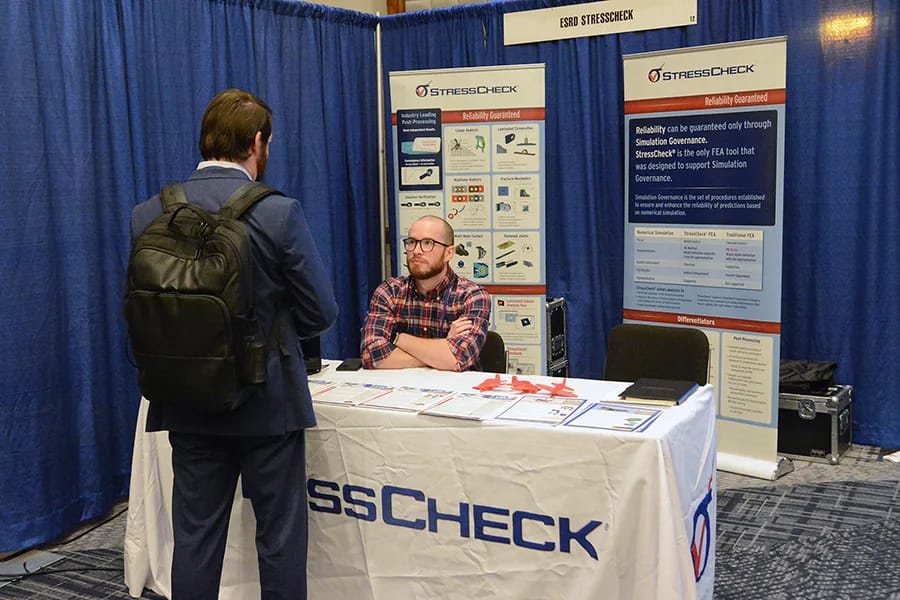
An ASIP attendees stops by ESRD’s booth at ASIP 2022 to chat with Brian Lockwood.

ESRD can be found at Booth 5 and will have several staff members available to chat, provide demonstrations, troubleshoot issues (StressCheck Clinic), and answer questions about our training course, our technical presentation, our software products and our composite repair solutions.

We’ll be handing out some fun giveaways at our booth! Stop by early to chat with us and grab one!
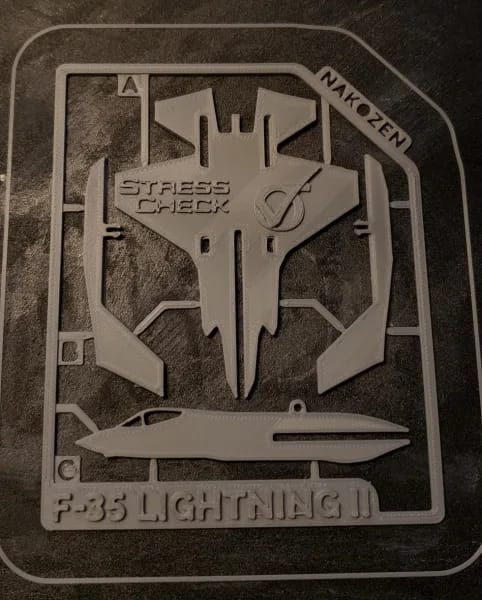
3D printed F-35 Lightning II model (courtesy Avery German/Nakozen)

Participating ESRD Staff

Contact information for ESRD staff participating in ASIP Conference 2023 is as follows:

  • Mr. Brent Lancaster – brent.lancaster@esrd.com
  • Mr. Brian Lockwood – brian.lockwood@esrd.com
  • Mr. Patrick Goulding – patrick.goulding@esrd.com
Tags: Aerospace and DefenseASIPBonded RepairsDaDTDemosFracturePresentationSim AppsStressCheck-Powered AppsTrainingWorkshop
2

You also might be interested in

S.A.F.E.R. Simulation Views: StressCheck Basics Q&A

S.A.F.E.R. Simulation Views: StressCheck Basics Q&A

Apr 15, 2019

In this edition of S.A.F.E.R. Simulation Views we asked Brent Lancaster, ESRD's Principal Support Engineer, about the basics of StressCheck Professional. Learn why it was developed, what it supports, how to master it, and more!

ESRD to Exhibit and Provide Training Course at AA&S 2019

ESRD to Exhibit and Provide Training Course at AA&S 2019

Mar 20, 2019

ESRD, Inc. will be exhibiting and providing a training course on verifying the accuracy of engineering simulations at the AA&S/PS&S Conference 2019 in Washington, D.C. from April 22-26, 2019. We hope you will drop by our training course and booth to check out the latest!

Why Is a Hierarchic Modeling Framework Important?
Selecting the simplest model for an analysis is not always trivial for aerospace engineers. A Hierarchic Modeling framework eases this burden by providing support for virtual experimentation.

Why Is a Hierarchic Modeling Framework Important?

Jul 19, 2018

In this S.A.F.E.R. Simulation article, we explore the concept of Hierarchic Modeling, some practical applications of Hierarchic Modeling, and the importance of implementing a Hierarchic Modeling framework in CAE software tools to support the practice of Simulation Governance.

Leave a Reply

We appreciate your feedback!
Cancel Reply

You must be logged in to post a comment.

Looking for Resources?

Interested in a Demo, Evaluation or Purchase?

Have a Software Question, Issue or Feature Request?

Recent News & Events

  • Trustworthiness in Simulation: Credibility or Decision-grade Reliability?
  • Beyond the Black Box: Explainable AI Requires Explainable Simulation
  • Turtle Shells and Legacy Finite Element Codes: Evolutionary Constraints in the Age of Explainable AI

Quick Links

  • Quick Start Guide
  • Documentation
  • Software FAQs
  • Software Demos

Testimonials

  • “A screening of existent commercial and non-commercial tools was carried out in respect to their fracture mechanics capabilities, their design abilities, implementation as well as their complexity. Although, there are many software possibilities, only those within the reach of the author were evaluated. This resulted in the selection of the commercial tool StressCheck. The assessment of crack propagation on compact tension and two stringer specimens governed by the Paris and Forman regimes was satisfactory compared with experimental results using the material data from simple standard specimens.”

    Lloren Llopart Prieto (EADS)
    Doctoral Thesis, "Modelling and analysis of crack turning on aeronautical structures"

Testimonials

“We have been having very good success using the P-Version finite element code, StressCheck, to develop the 2-D solutions for two independent cracks in a plate. I have asked one of our AFGROW team members to model the plate and lug cases using StressCheck and compare them to the existing AFGROW closed-form solutions. [He] modeled the cases several different ways to be sure that he was getting the best possible solutions. He has verified that the bearing load option in StressCheck provides excellent results.”

Jim Harter, Team Leader-Analytical Fatigue/Fracture Reliability Team Air Force Research Laboratory (AFRL)

Member Portal

  • Member Registration
  • Member Login

Contact Us

© 2026 · Engineering Software Research & Development, Inc. | Terms & Conditions | Privacy & Cookie Policy | Software License Agreement | Software Maintenance and Technical Support Policy

Prev Next

We use cookies on our website to give you the most relevant experience by remembering your preferences and repeat visits, as outlined in our Cookie Policy. You may adjust your cookie preferences within .

ESRD
Powered by  GDPR Cookie Compliance
Privacy Overview

This website uses cookies to improve your experience while you navigate through the website. Out of these, the cookies that are categorized as necessary are stored on your browser as they are essential for the working of basic functionalities of the website. We also use third-party cookies that help us analyze and understand how you use this website. These cookies will be stored in your browser only with your consent. You also have the option to opt-out of these cookies. But opting out of some of these cookies may affect your browsing experience.

Strictly Necessary Cookies

Strictly Necessary Cookies should be enabled at all times so that we can save your preferences for cookie settings.